The Hunters: German U-Boats at War, 1939-43 - Patrol 6 (September 1940)
1/9/1940
BdU has informed us that progress is being made on the G7E torpedoes and that we can expect greater reliability from them in future. Command is, for once, appreciative of our efforts given the chronic lack of reliability we have all endured. With that more favourable sentiment I was able to influence 2nd Flotilla to assign us to the Atlantic again, in the hope of finding convoys.
We sailed from our new home at Lorient.
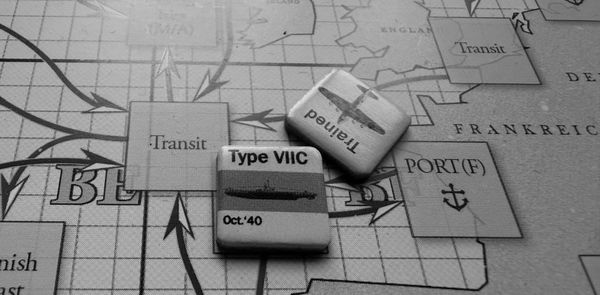
Almost as soon as the French coast disappeared, an aircraft appeared. We did not wait to identify it. A successful crash dive put us under before it could press an attack.
The second transit and the first two Atlantic sectors were empty. We were beginning to think the patrol would end as fruitlessly as the last when a radio message arrived: B-Dienst had located a convoy in our vicinity.
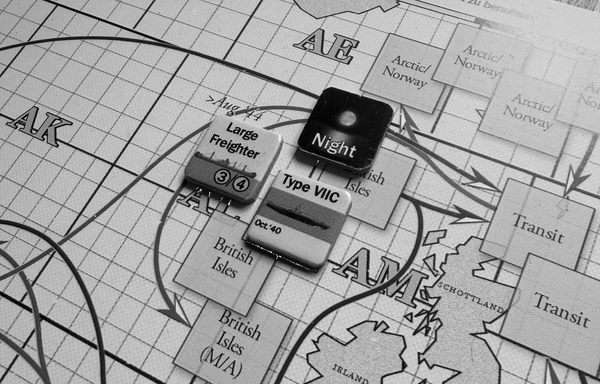
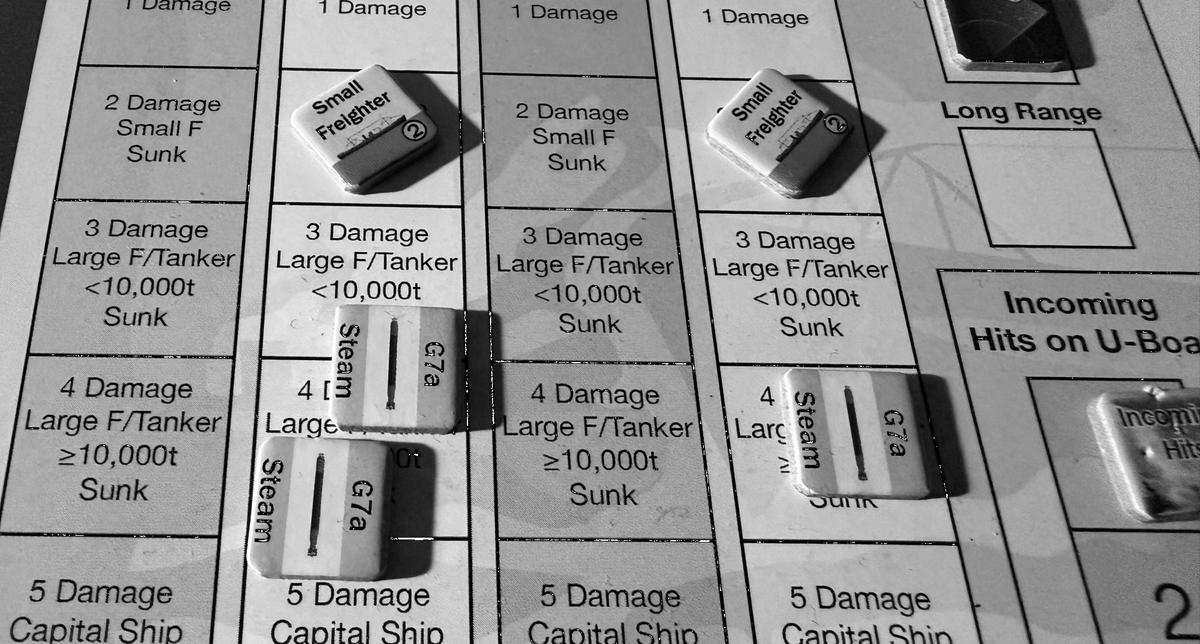
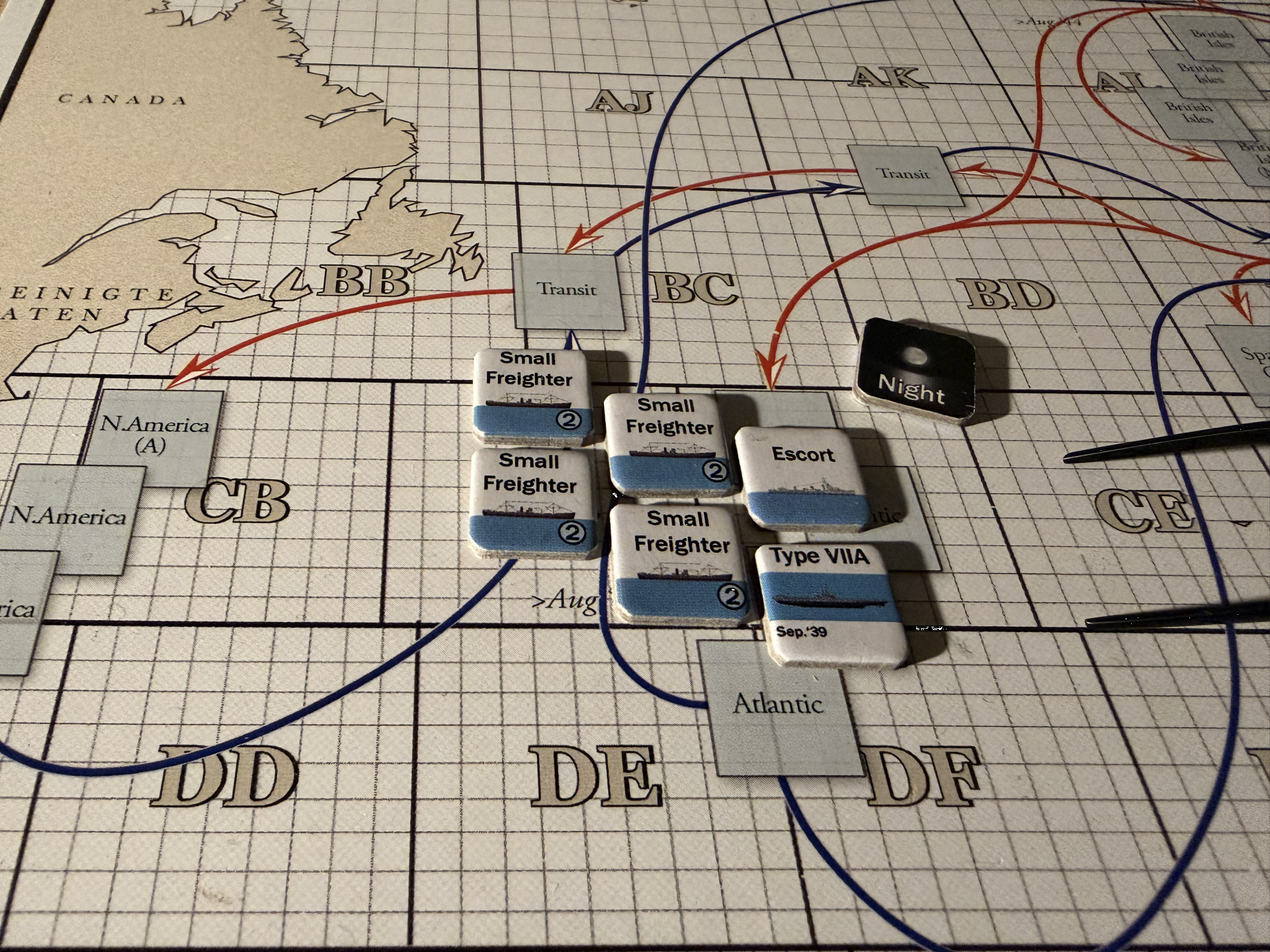
We found them at night in the third Atlantic sector, four small freighters: Spind (2,100 tons), Kayeson (4,600 tons), Henri Mory (2,600 tons) and Aenos (3,600 tons). Modest targets, but after the barren weeks I was not inclined to let them pass. I ordered a spread of two torpedoes each against Kayeson and Aenos. Against my own earlier caution I took us in to medium range on the surface. These torpedoes had better work.
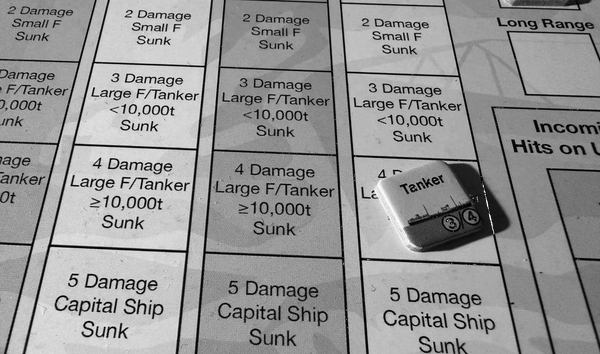
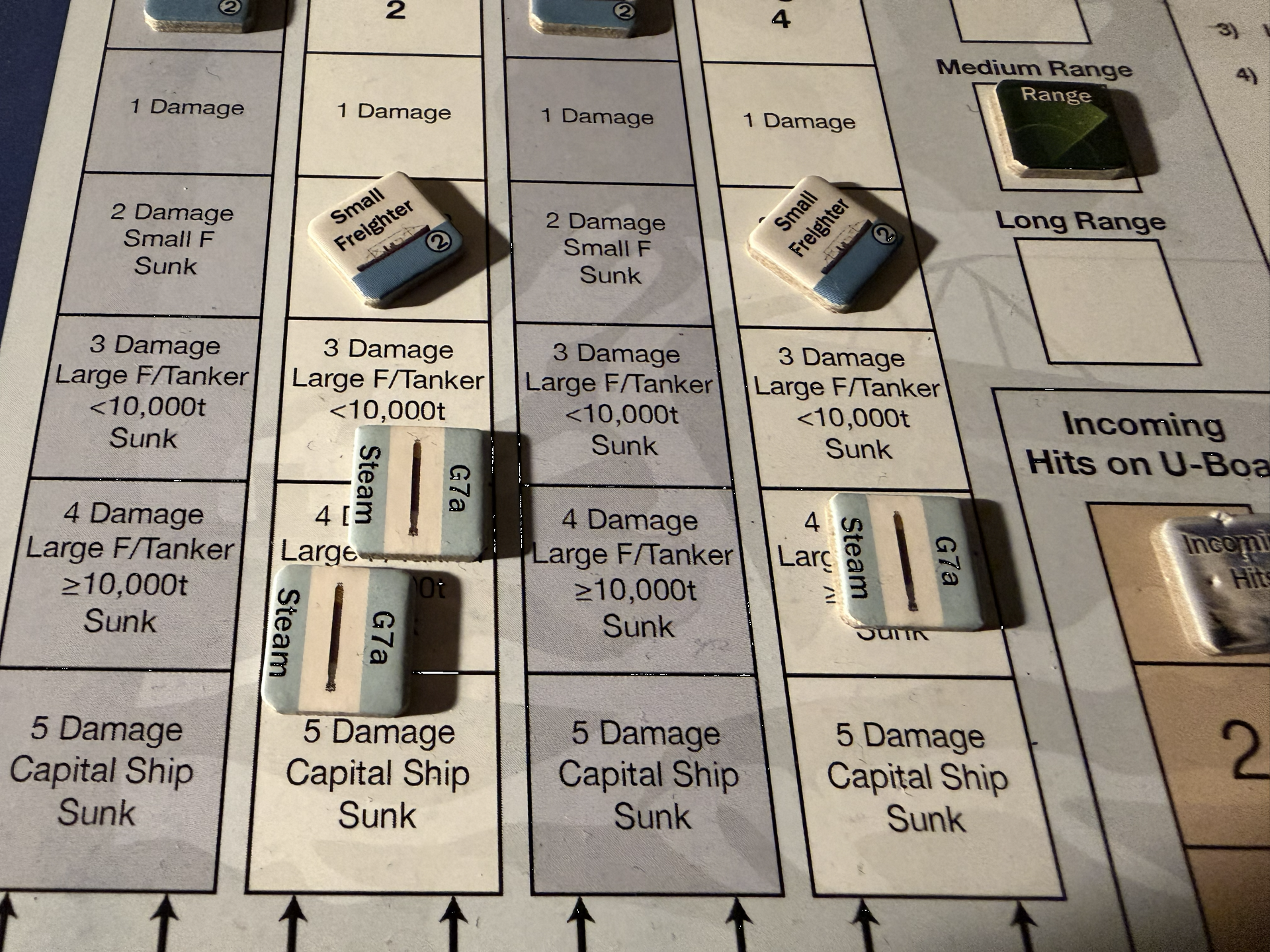
Both weapons fired at Kayeson struck and detonated. Of the two aimed at Aenos, one hit and one missed; the hit detonated. Both ships broke up almost immediately. The explosion on Aenos was particularly spectacular.
The escort was trained and gained a fix. We turned hard to port; he matched the turn a moment later and ended almost directly above us. The depth charges came down right on top of the boat. The noise was utterly deafening. The conning tower took damage (mainly the Flak mounts) and Diesel Engine No. 1 was hit. Men were thrown hard against bulkheads and fittings. Several were maimed by the bursts.
I had no choice but to take her deeper, beyond test depth. The extra depth finally threw him off. We drifted while the sound of charges grew more distant.
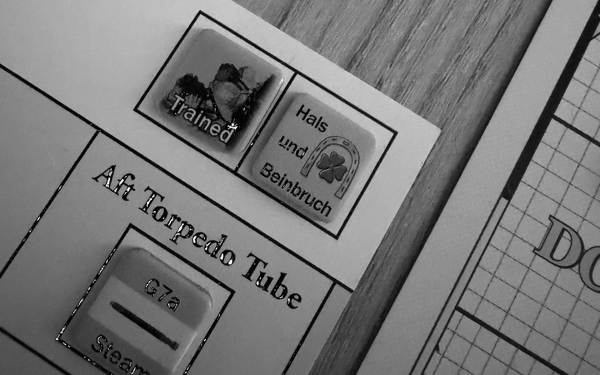
When it was safe to surface we assessed the damage. The conning-tower damage proved less severe than feared; our new engineer oversaw successful repairs to the Flak mounts despite the complexity of the mechanism. The diesel, however, was more seriously hurt and would need proper yard attention. We would be limping home on one engine.
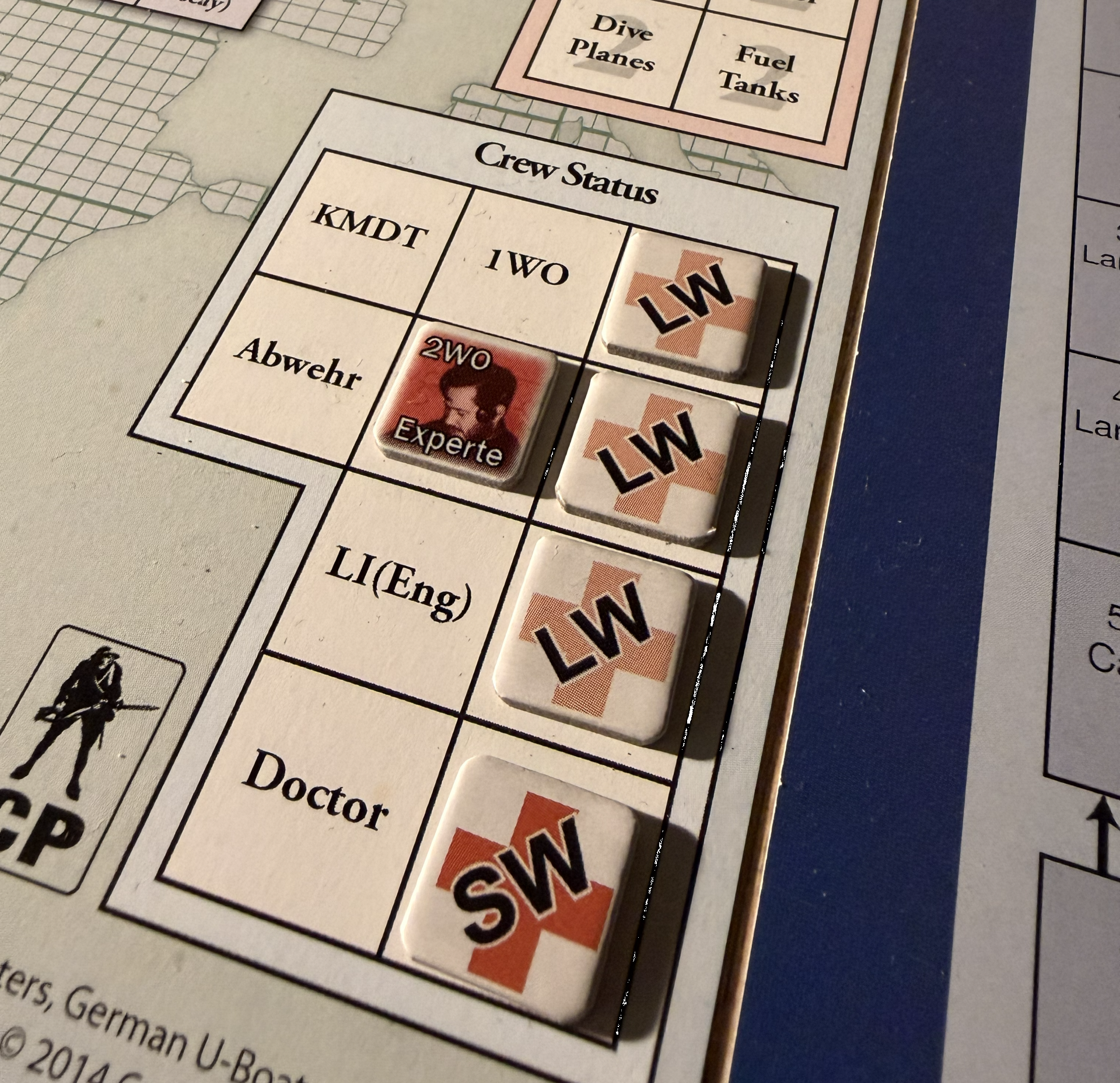
Below, Marineassistenzarzt Laar was busy. Most of the injuries were cuts and bruises. Bootsmann Adelman, Matrose Klemperer and Torpedomechaniker Stauffer had been badly knocked about but would recover. Matrose Eichmann, however, had sustained a serious head wound and almost certainly a severe concussion. Laar could only keep him as comfortable as possible.
The return transit and the Bay of Biscay passage were quiet. Our single remaining diesel got us back to Lorient. Eichmann was carried ashore on a stretcher. The assessment was correct, he will be out for at least three months and we shall need a replacement. The four wounded men have been awarded the Wound Badge in Black.
We brought home 8,200 tons. Torpedo accuracy was a solid 75%, and for once not a single dud. We paid for the decision to close the range with a savage depth-charging and an extra month in refit. Our next sailing will not be until December.
In further news, Korvettenkapitän Fischer put forward a nomination for my promotion. BdU denied it, citing the disaster of Patrol 5 and the fact that a boat a year into the campaign still stands at only 49,500 tons.
Fischer also informed us that upon our return from the next patrol our newly allocated Type VIIC, U-77, will be ready. 2nd U-bootsflottille is to become an exclusively Type IX formation specialising in long-range work. We are therefore to transfer to the 7th Flotilla under Korvettenkapitän Herbert Sohler, based at St. Nazaire. After the next patrol we are to return to Kiel to take delivery of the new boat.
The following promotions were also granted to crewmen in recognition of service and good conduct:
Bootsmann Fabio Adelman -> Stabsbootsmann Fabio Adelman
Maschinistenmaat Oskar Band -> Obermaschinistenmaat Oskar Band
Matrose (Maschinen) Marius Von Bingen -> Gefreiter (Maschinen) Marius Von Bingen
Matrose (Maschinen) Luka Schiff -> Gefreiter (Maschinen) Luka Schiff
Matrose (Maschinen) Albin Schwarzenegger -> Gefreiter (Maschinen) Albin Schwarzenegger
Matrose (Torpedo) Piet Widmann -> Gefreiter (Torpedo) Piet Widmann
Matrose (Torpedo) Maxi Stauffer -> Gefreiter (Torpedo) Maxi Stauffer
Funkmaat Yannick Hoehman -> Oberfunkmaat Yannick Hoehman
Matrose (Funker) Oliver Heilprin -> Gefreiter (Funke)) Oliver Heilprin
Steuermannsmaat Konrad Lasch -> Obersteurmannsmaat Konrad Lasch
Steuermannsmaat Laurens Lehman -> Obersteurmannsmaat Laurens Lehman
Steuermannsmaat Elias Neuhaus -> Obersteurmannsmaat Elias Neuhaus
Obergefreiter Lio Brestrich -> Hauptgefreiter Lio Brestrich
Gefreiter Rayko Stricker -> Obergefreiter Rayko Stricker
Gefreiter Edgar Schott -> Obergefreiter Edgar Schott
Gefreiter Tilman Staudinger -> Obergefreiter Tilman Staudinger
Gefreiter Edgar Eisenmann -> Obergefreiter Edgar Eisenmann
Matrose Willi Ehman -> Gefreiter Willi Ehman
Matrose Paulus Blobel -> Gefreiter Paulus Blobel
Matrose Magnus Bodenstein -> Gefreiter Magnus Bodenstein
Matrose Alfred Klemperer -> Gefreiter Alfred Klemperer
Matrose Tom Höss -> Gefreiter Tom Höss
Matrose Yannick Hartknoch -> Gefreiter Yannick Hartknoch
Matrose Sebastian Aumann -> Gefreiter Sebastian Aumann
Matrose Jacob Geller -> Gefreiter Jacob Geller
Context
The months of September-November 1940 marked the most destructive phase of the early U-boat campaign. This period produced well over 400,000 tons of shipping lost to U-boats, even with still low numbers of boats at sea.
The defining events were the coordinated night attacks of mid-to-late October:
Convoy SC 7 (16-19 October) was savaged. Of roughly 35 ships, 20 were sunk (~79,500 tons). Otto Kretschmer's U-99 alone accounted for a large share. It remains one of the highest percentage losses of any North Atlantic convoy.
Immediately afterward the same group of boats fell on Convoy HX 79, sinking another 12 ships (around 75,000 tons).
The nights of 18-19 October were the two worst consecutive days for Allied shipping losses in the entire Battle of the Atlantic. Wolfpack tactics had proved devastating against thinly stretched and inexperienced escorts.
While these battles unfolded at sea, the Battle of Britain was drawing to a close and the Blitz against British cities was intensifying. Italy's entry into the war had already opened a second front in the Mediterranean, and German surface raiders were beginning to stretch British naval resources further. For the U-Bootwaffe, however, the autumn of 1940 remained the most favourable operational environment it would enjoy until the American entry into the war.
Commentary
A fairly lucky patrol for us once again. The torpedo quality was good, and while we took a hammering by depth charges, the boat held up and we only experienced light-wounds against the crew for the most part, which has no effect on our crew efficiency going forward.
I'm also happy now that the delivery of our Type VIIC is on the horizon, the greater torpedo stocks and range will allow us to squeeze a bit of additional efficiency out of our patrols.
It's unfortunate that we missed the promotion on this round. The added rank would have given us a little bit of extra flexibility on choosing our own patrol areas. The Atlantic hunting ground seems to be by far the most productive due to the presence of convoys, but it's not the end of the world since operations starting in January 1941 will shift toward the Atlantic in any case.