The Hunters: German U-Boats at War, 1939-43 - Patrol 15 (August 1942)
1/8/1942
We used our influence called in a few favours, and command agreed to a wolfpack assignment in the Atlantic.
We sailed from St. Nazaire with a new crewmembers. It feels unusual not to have Pfefferberg aboard. Lindner will have to work hard to earn his place.
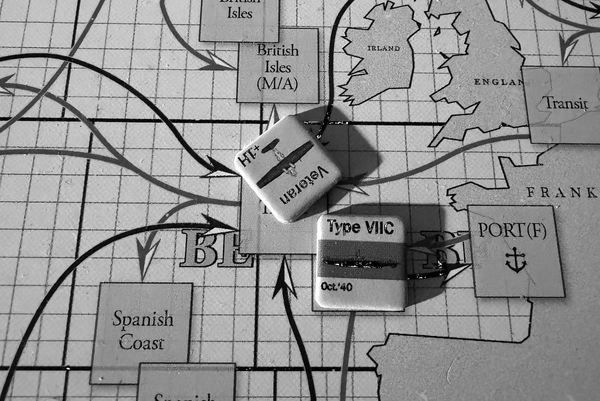
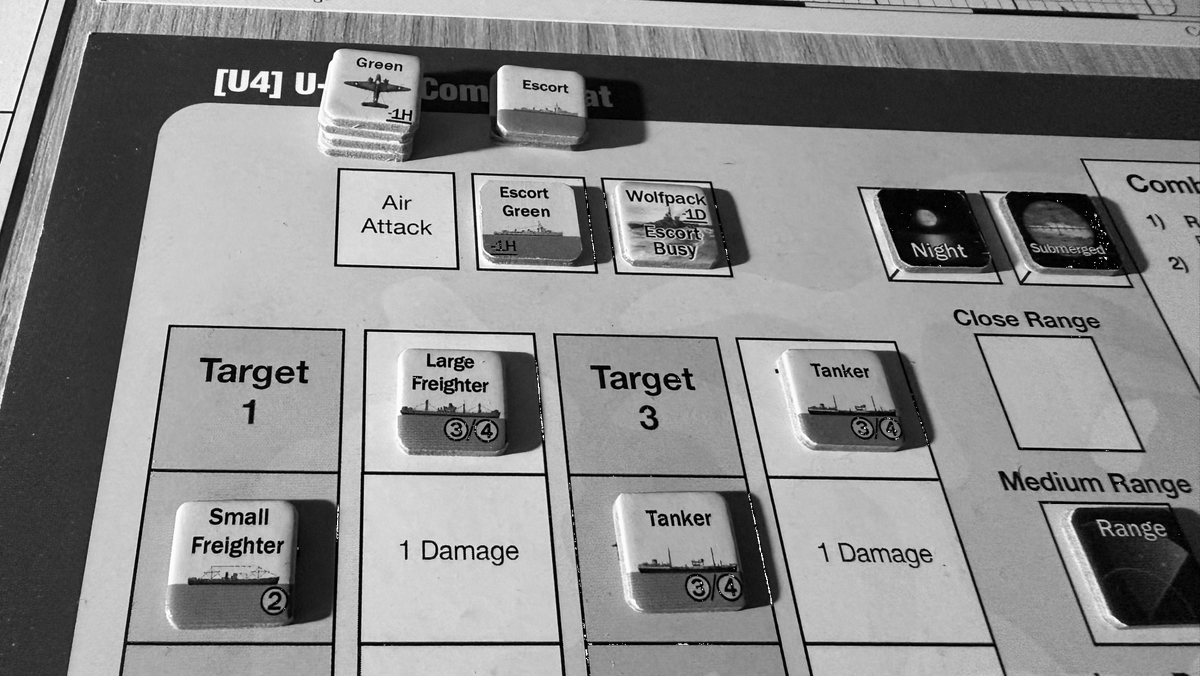
In the Bay of Biscay we met an aircraft we had not seen in person before, an American-built B-24 Liberator. She was fast but thanks to the quality of our crew and experience, our crew was faster, and we got the boat under the waves before she could continue an attack run, and we continued on our way.
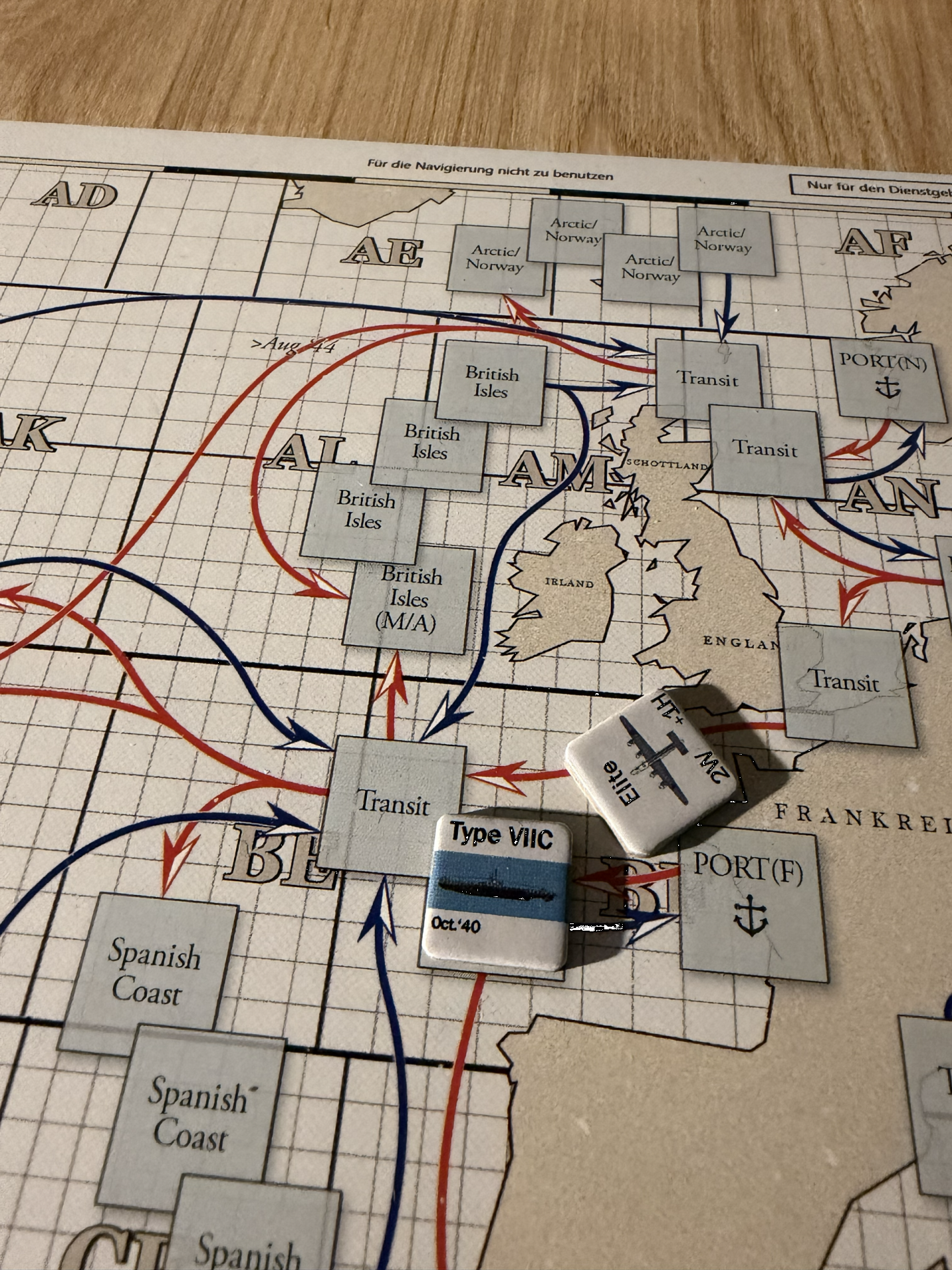
The first transit and the first Atlantic sector were empty.
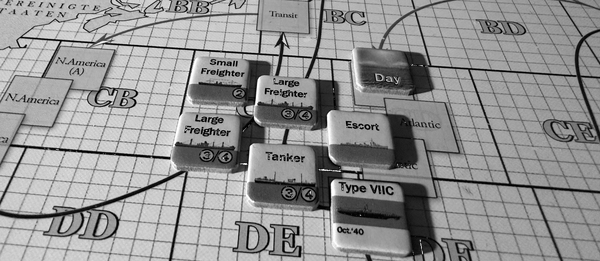
In the second sector, at night, the pack made contact with a convoy and we began our run. The escorts were light, drawn off chasing other boats, the perfect setup. The targets were somewhat dissappointing, mainly freighters and only a small tanker, the Alderpool (4,300 tons), Havtor (1,500 tons), Surat (5,500 tons) and the tanker Fern (6,600 tons). We closed to medium range at periscope depth and fired two forward torpedoes each at Alderpool and Fern.
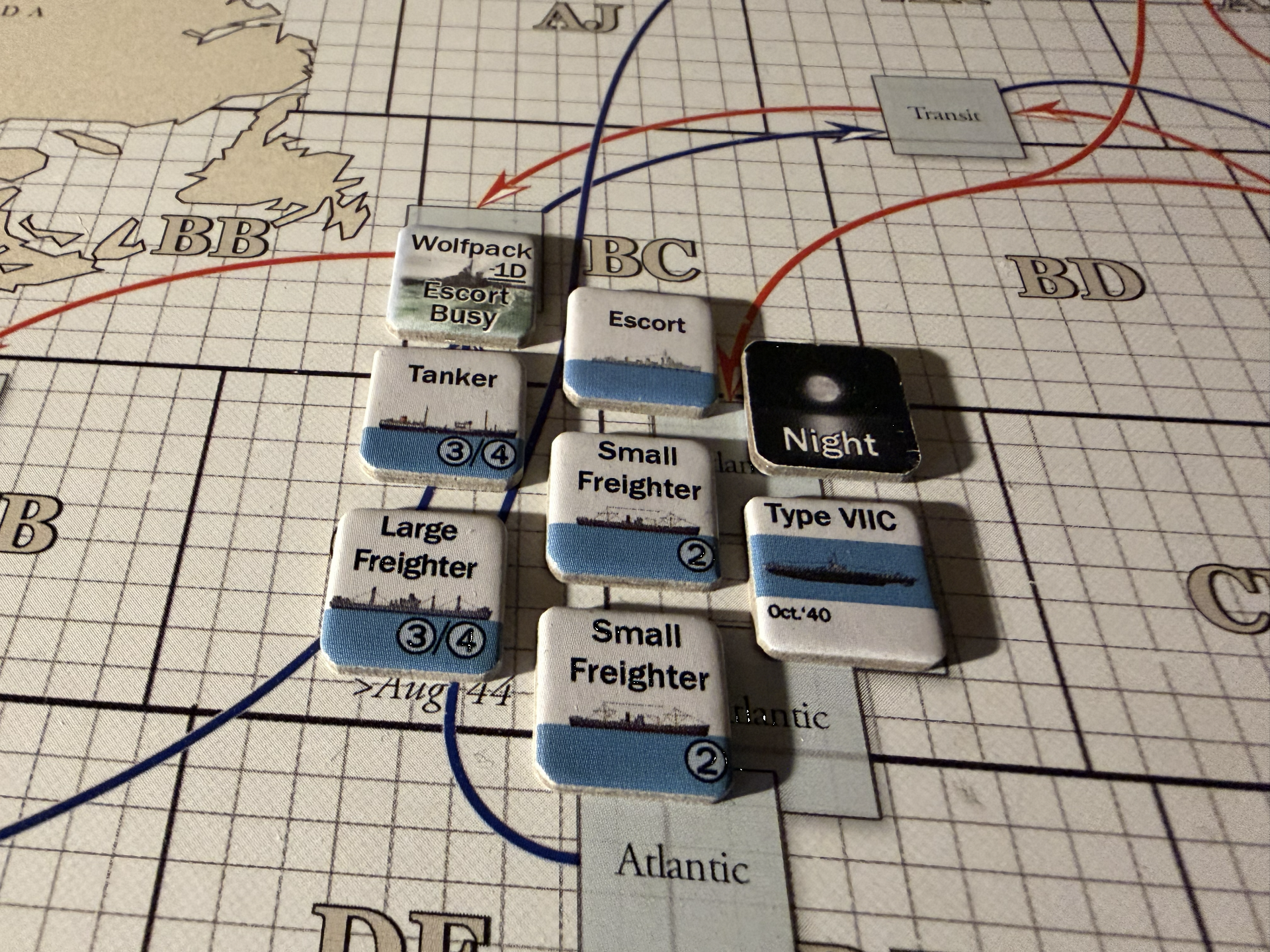
One miss and one hit on Alderpool, the hit only detonated for light damage. The same result against Fern. The escort still on station was very experienced, probably one of the better ones the Royal Navy had to offer, but we went deep and lost him.
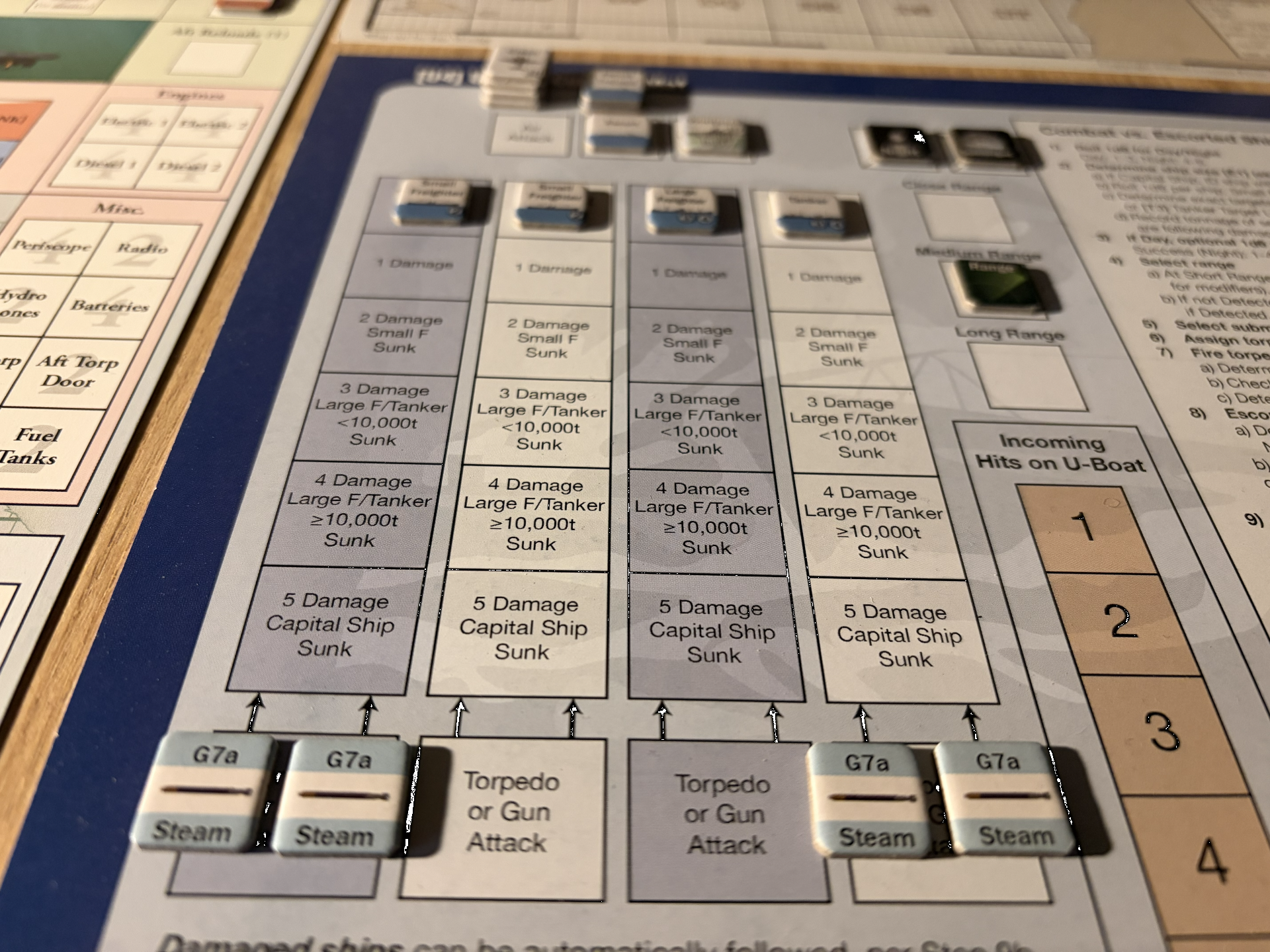
Fern and Alderpool began to fall behind, but at different speeds. I chose to stay on Fern. Unescorted, she should be easy to finish. The gun scored one miss and one hit, only slight damage. The aft G7A ran true and finally put her under. By then the rest convoy was long gone and we'd have to regroup.
In the third sector, again at night, the pack assembled and coordinated another attack. The escorts were a mess, off guard and scrambling. Targets this time were much better, Flynderborg (2,000 tons), Botwey (5,100 tons), and tankers Italia (10,000 tons) and Languedoc (9,500 tons). We approached at medium range, periscope depth. I judged Languedoc the best of them and fired a spread of three at her, with a single shot at Flynderborg for good measure in hopes of crippling her.
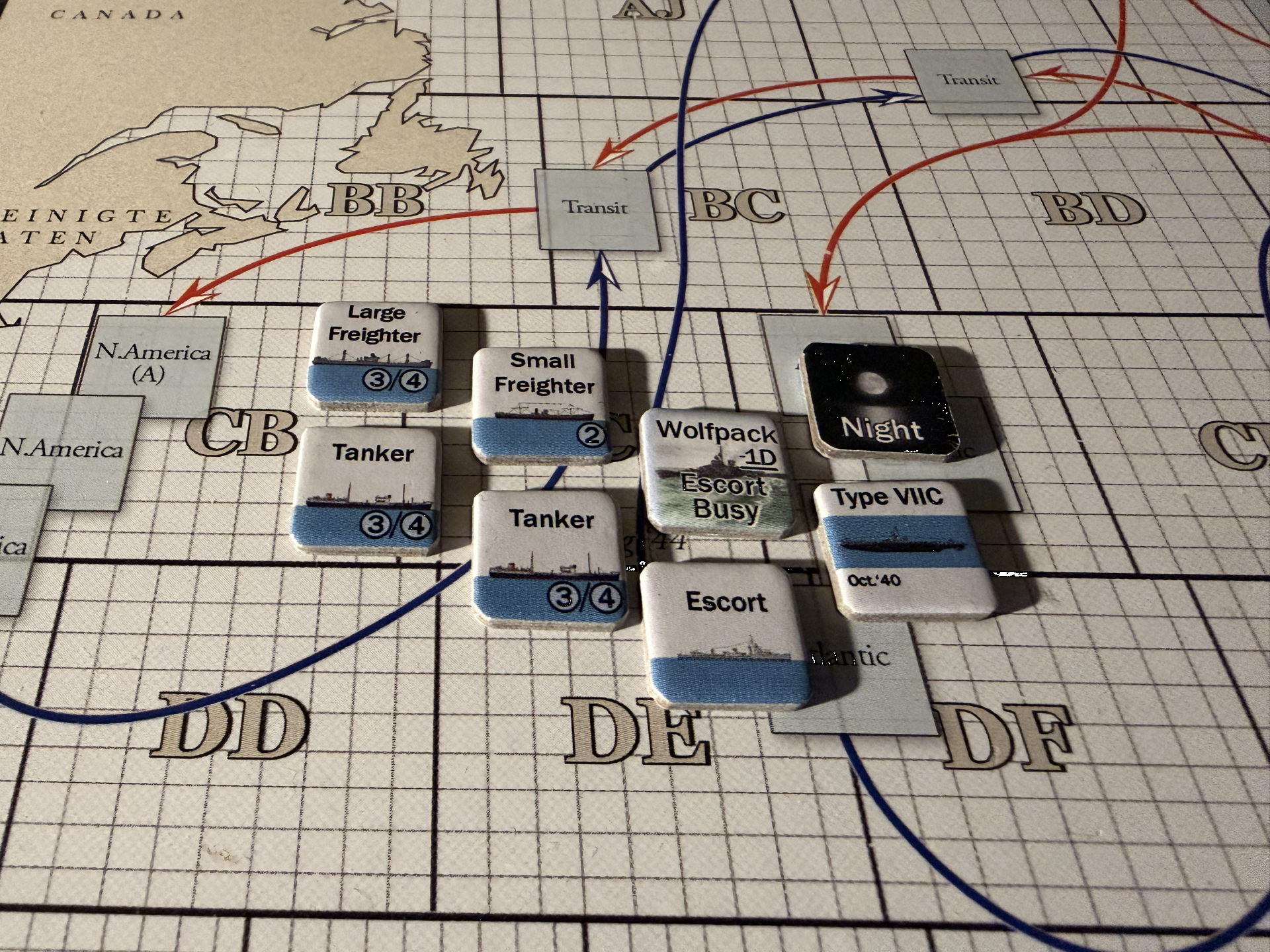
The shot at Flynderborg hit and detonated for only moderate damage, she stayed afloat as expected Of the three at Languedoc, two missed. The one that struck detonated and caused only superficial damage. The escort was a fresh bunch, inexperienced and too distracted by the chaos that was unfolding to get a fix on us. We slipped clear.
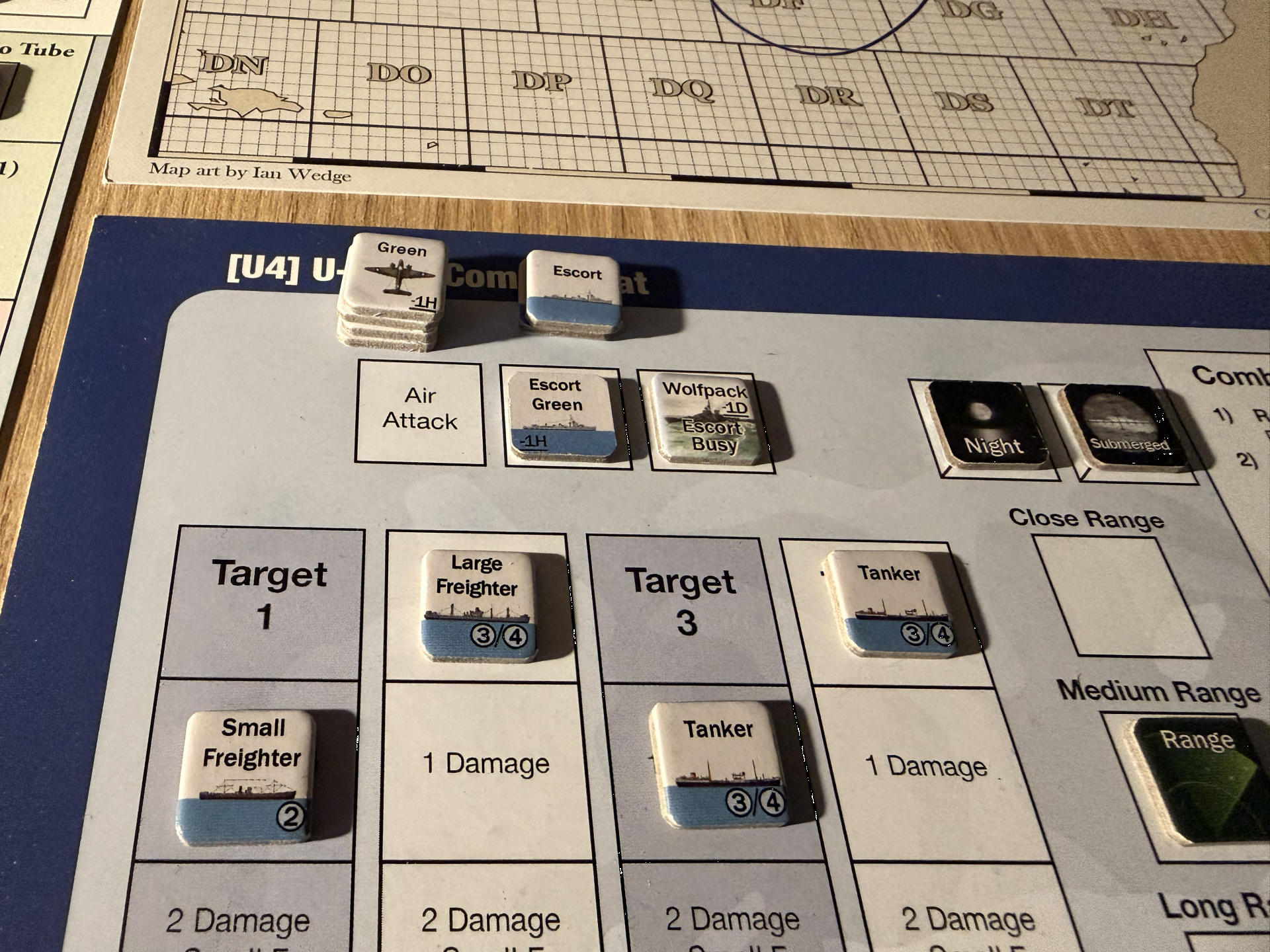
Once again the escorts abandoned the stragglers. We ran down Languedoc and finished her with the gun, two shots, two hits. She settled slowly and we went on.
In the fourth sector, at night, we found a lone small freighter, Dione II, 2,700 tons. Odd to meet an independent this far out; perhaps a straggler from one of the convoys the wolfpack had already worked over. I closed for a gun attack. One hit, one miss. The hit was critical and she blew up spectacularly, illuminating the dark night sky in a fireball.
We attempted to radio command for a resupply and at last made contact with one of the milk cows. We managed to evade Allied patrols long enough to take on gun ammunition. She had no torpedoes left for us and we went on our way.
The first Atlantic sector on the return swing was empty. In the second, at night, the pack was still working the area with vigor and we joined another run. Targets this time were Ruckinge (2,900 tons), Grayburn (6,300 tons), Peiping (6,400 tons) and Beaverdale (10,000 tons). Only the slower G7Es remained forward. I fired all four at Beaverdale from medium range at periscope depth.
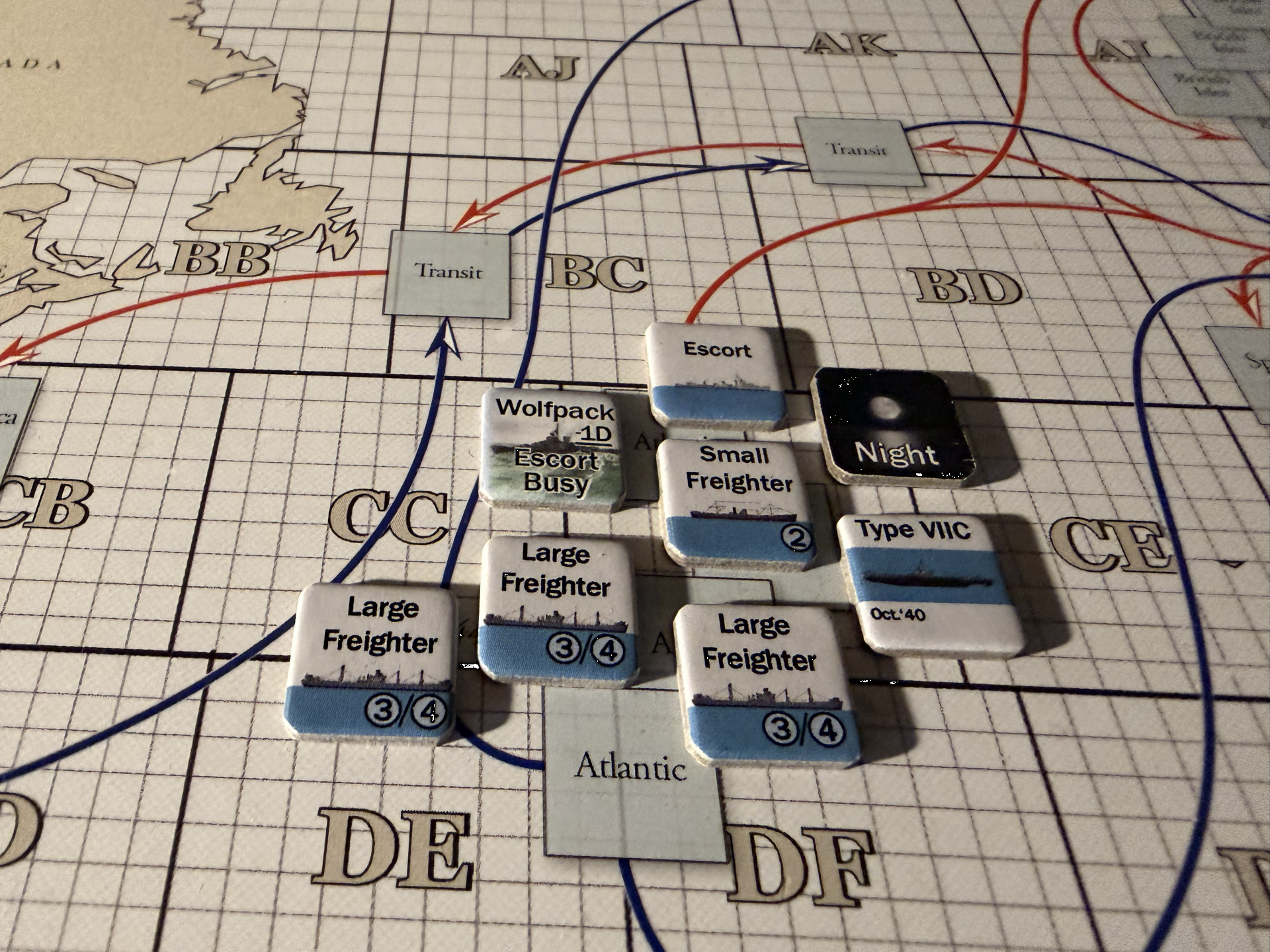
Two hits, two misses. Both hits detonated and it was enough to cause her to buckle and go down.
With nothing left to gain by caution I took her deep at once. The sturdy hull held. The escort was knew what he was doing well enough, dogging us for a short while, but we lost him. Only a single aft torpedo remained. I broke off and looked for independents.
In the third sector we sighted another convoy and had to let it pass, we had nothing to gain from an encounter such as this with only a single torpedo. The fourth was empty. The inbound transit and the Bay of Biscay were quiet. We reached St. Nazaire without further incident.
Four ships, 28,800 tons. It makes up for the last patrol. An eventful one to be sure, but we came off this one rather well. The extra time at sea has taken its toll, the boat will be in the shipyard until December.
Command is pleased enough that I have been promoted to Fregattenkapitän. At this rate it will not be long before I am promoted out of a boat and into a desk.
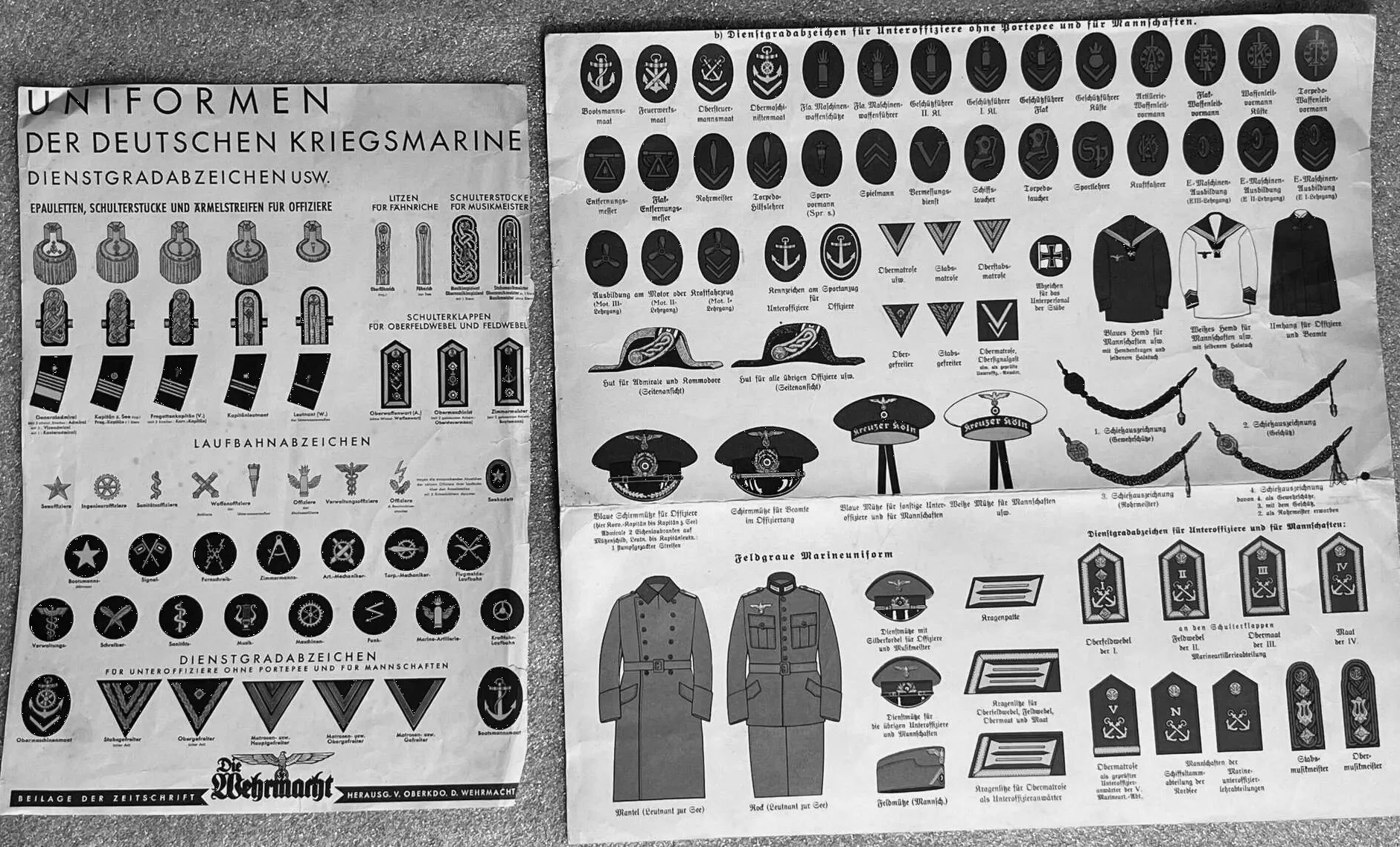
Marineassistenzarzt Edmund Mayer received his U-boat War Badge for two patrols completed. A long list of the crew were advanced as well — Adelman to Oberbootsmann, Bachmann to Stabsmaschinistenmaat, several of the engineering and torpedo rates, Hoehman to Funkmeister, Neuhaus to Steuermann, and a solid number of the seamen. Iron Crosses Second Class went to ObLtzS Leonard Fischer, LtzS Gustav Lindner, ObLt (I) Wolfgang Klein and Marineassistenzarzt Mayer. They earned them.
Context
With the American coastal campaign shut down, the u-boats returned en masse to the mid-Atlantic air gap. Wolfpack attacks on the North Atlantic convoys became the main effort again, and the results were often devastating.
August opened with SC 94 losing eleven ships to a large pack. September brought ON 127. October was even worse, SC 104, HX 212 and SC 107 (15 ships alone) and SL 125 (12 ships) were all badly hit. November remained one of the deadlist months for Allied shipping, well over a hundred ships and something in the order of 700,000 tons lost to u-boats, even as boats were drawn toward the Gibraltar and North African approaches in support of the fight against the Operation Torch landings.
More boats were finally at sea than ever before, but losses were going up too. Escorts were slowly becoming better trained through the hard lessons learned, High-Frequency Direction-Finding (HF/DF) was becoming the norm, and the very first long-range aircraft and escort carriers were appearing. The air gap was still open for now, and in it, the wolfpacks could still overwhelm a convoy's escorts.
Away from the main routes, the waters off Trinidad remained productive for the Ubootwaffe into the autumn, before convoy organisation finally closed that hunting ground as well.
On the Eastern Front, the German offensive had stalled at Stalingrad. In North Africa, the Second Battle of El Alamein kicked off in late October. This was followed in November by the Allied Landings of Operation Torch. In the Pacific, the bloody struggle for Guadalcanal continued.

Commentary
Luck was definitely with us on this patrol, there were many opportunities where things could have easily gone the other way, starting with the Liberator encounter.
Wolfpack assignments in the Atlantic definitely seem to be the more profitable assignment, plenty of convoy chances and a good chance at evading detection.
Our night-time submerged attacks at medium range seem to be working, currently it seems to be the best way to avoid detection while still providing a reasonable chance of scoring hits, and score hits we certainly have.
With 4 patrols remaining at most before our upcoming reassignment, there's a good chance we'll be able to score a 'Substantial Victory' provided we manage to stay alive. Our luck just needs to hold on a little longer.