France '14: A Crossing at Dinant
Background
Dinant, Belgium, 15th August 1914:
As the French became increasingly aware that the German Army was conducting a sweeping movement through Belgium, Larenzac detached General Mangin's 8e Brigade to work loosely with Sordet's Corps de Cavalerie. The 143e RI of the 8e Brigade was thus ordered to move to and secure the Meuse crossings at Dinant, while the brigade's 45e RI went with the Corps de Cavalerie to provide infantry support. To Mangin's south was the entire Ier Corps d'Armée deployed along the Meuse from Givet to Mezieres. With the exception of Sordet's Corps de Cavalerie racing around the country side, Mangin was largely holding the French extreme left flank.
Mangin quickly occupied the strategic old citadel located above Dinant and awaited the German attack. After German cavalry was spotted in the vicinity, Mangin received some much needed support in the form of the 3e Brigade from the Ier Corps.
On 15 August, von Richtofen's H.K.K.1 converged upon Dinant and attempted to force a crossing.
Brief
0000, 15 August 1914
Mission
H.K.K 1 is to seize the Meuse River crossings at Dinant, primarily the heavy bridge running through the town. Secondary crossings at Anseremme-Forges, Houx and Yvoir are also to be secured if possible. This is in order to facilitate maneuvre of 1. Armee west and south into Belgium and France. End state: crossings controlled or denied to the enemy by 1000 on the morning of 16 August, with the corps in a position to hold Dinant against counter-attack.
Enemy
Enemy forces are unknown, but estimated to be at least a division-sized French infantry unit, with machine gun and field gun support. These forces are expected to be entrenched inside Dinant, but also entrenched on the riversides at Yvoir, Houx, Anseremme-Forges at the Meuse-Lesse confluence, along with a strong presence within the Dinant citadel. It is likely that a French reserve and HQ is also kept in the vicinity of Weillen.
Terrain and Weather
Terrain consists of rolling countryside with substantial amounts of forest cover and scattered villages and towns throughout.
Primary roads lead into Dinant from Celles, and Ciney and will likely be the preferred avenues of approach. Higher elevation on either side of the Meuse at Dinant will likely provide good overwatch and firing positions on the town.
A secondary crossing consisting of a medium bridge 7km south-west of Dinant also provides the possibility of a flanking maneuvre behind the French lines at Dinant.
Weather is currently Normal, with 1km visibility at night time, and 4km during daytime. Predictions for the next 24 hours is 100% chance of Normal conditions, with visibility ranging between 4km and 5km. Sunrise is at 0600 and sunset at 1800
Troops Available
Friendly forces are as follows:
H.K.K 1 (von Richtofen)
—Garde-Kavallerie-Div.
——Garde-Kav. Bde. 1
———I./Garde du Corps
———I./Gd. Kurassier-Regt. 2
——Garde-Kav. Bde. 2
———I, II, III and IV./Garde-Ulanen-Regt. 1 - III and IV scheduled to arrive south of Falmagne after 0600, 15 August
———I, II, III and IV./Garde-Ulanen-Regt. 3
——Garde-Kav. Bde. 3
———I./Garde-Drgnr. Regt. 1
———I./Garde-Drgnr. Regt. 2
——Div. Artillerie
———Reiter-Abt./GFAR. 1 (12 guns)
———Gd.MG-Abt. 1
—5. Kavallerie-Div.
——Kav. Bde. 9
———I./Dragoner-Regt. 4
———I, II, III and IV./Ulanen-Regt. 10 - I and II to remain in situ
——Kav. Bde. 11
———I./Leib-Kur. Regt. 1
———I./Dragoner-Regt. 8
——Kav. Bde 12
———I./Husaren-Regt. 4
———IV./Husaren-Regt. 6
——Div. Artillerie
———Reiter-Abt./FAR. 5 (12 guns)
———MG-Abt. 1
—Supporting Units (H.K.K 1)
——Jäger-Btl. 11
——Jäger-Btl. 12
——Jäger-Btl. 13
Time
Time available is limited, seizure of Dinant and surrounding objectives is expected to be achieved by 1000, 16 August.
Civilian Considerations
Civilian presence is expected to be negligible.
Execution/Tasks
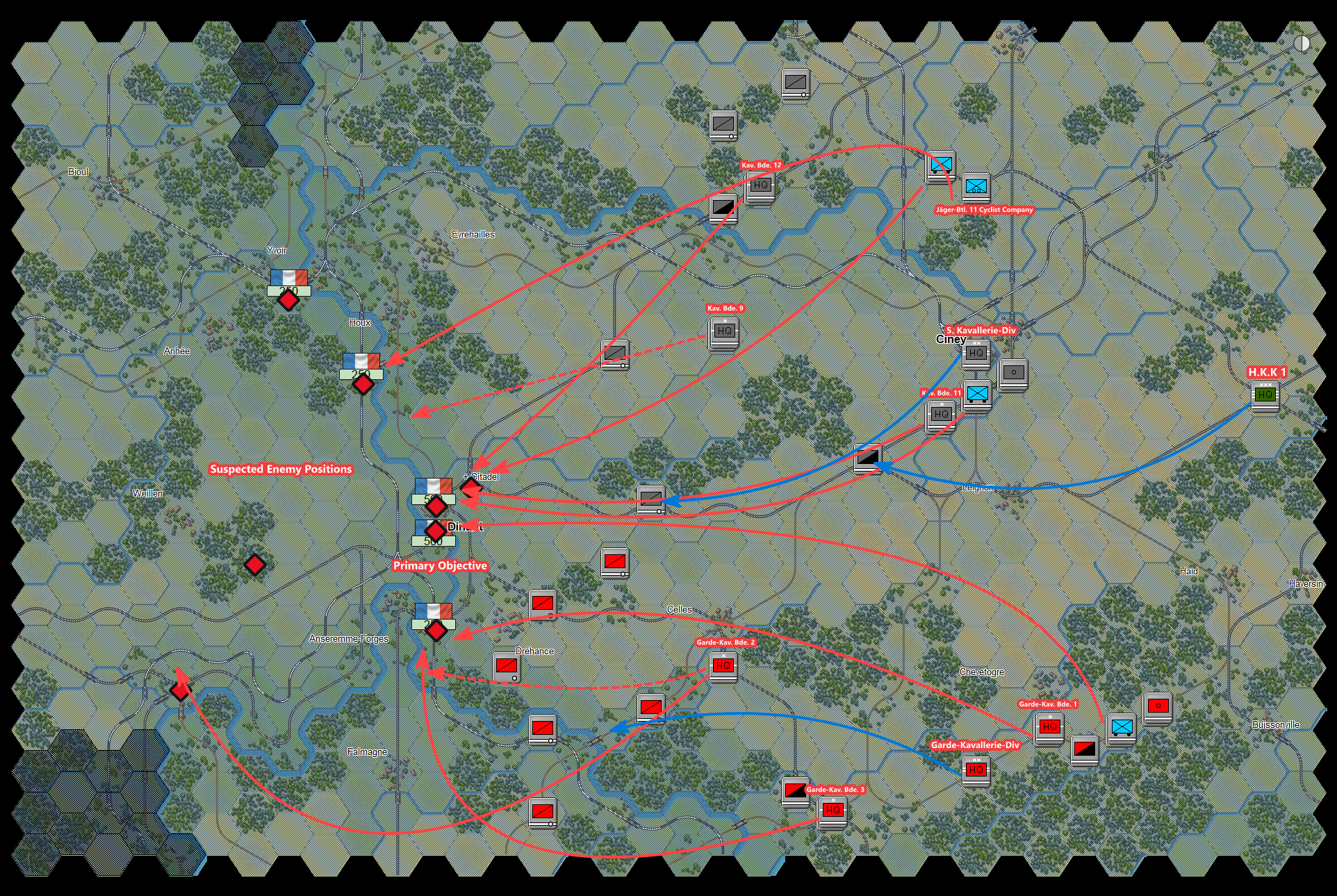
Kav. Bde. 9 to screen north of Dinant.
Kav. Bde. 11 and 12 to move to contact against forces at Dinant, followed by a breach of the line to secure the crossing.
Garde-Kav. Bde. 1 and 3 to move to contact, breach and secure crossings Anseremme-Forges.
Garde-Kav. Bde. 2 to screen south of Anseremme-Forges, and attempt secondary crossing to interdict enemy C2 capability behind the main line.
Jäger-Btls 11, 12 and 13 to assault Dinant alongside cavalry once enemy positions have been ascertained.
Jäger-Btls. 11 bicycle companies to screen and optionally assault crossing at Houx following commencement of assault on Dinant.
Garde-Kavallerie and 5. Kavallerie Div. Artillerie to position on escarpment overlooking Meuse river between Drehance and Dinant in order to conduct support by fire during assaults on Dinant and Anseremme-Forges.
H.K.K 1 HQ is to base at road junction 4km west of Leignon
5. Kavallerie-Div. to base along road 6km east of Dinant
Garde-Kavallerie-Div. HQ to base 4km southeast of Drehance
Depending on levels of resistance, units tasked with assaulting Dinant may attempt to bypass Dinant citadel and assault town directly.
Battle
The German cavalry marched west commencing at 0000, closing on the Meuse. By 0600, Kav. Bdes. 9 and 12 had made contact with the garrison defending the citadel and the western approaches to Dinant. Further contacts confirmed at least two brigades inside Dinant itself, with field guns three kilometres to the south-west. Anseremme-Forges was also occupied by at least two infantry battalions and accompanying machine gun units. III and IV/Garde-Ulanen-Regt. 1 arrived in the area of operations as scheduled, south of Falmagne. Units massing around the citadel came under defensive fire from both the citadel and Dinant.
At 1000, German units continued to mass for the impending assaults on Dinant and Anseremme-Forges. Some units became disrupted in the process and would need rallying before they could commence a decisive assault. Garde-Kav. Bde. 2 encountered machine-gun positions covering the south-western secondary crossing. Defensive fire continued, though some German units were now close enough to return fire.
Support weapons from Garde-Kavallerie and 5. Kavallerie Div. Artillerie deployed on the east bank of the Meuse by mid-day, and would be in a position to commence fire within the following 2 hours. Garde-Kav. Bde. 2 assaulted and secured the south-western secondary crossing and eliminated the machine-gun unit holding it, opening a route toward the enemy’s communications. Garde-Kav. Bde 3 launched several assaults on Anseremme-Forges, inflicting very heavy casualties but failing to dislodge the defenders, who appeared to be fighting with their retreat cut off. Kav. Bde. 11, supported by Jäger-Btls. 11 and 12, attempted an assault on Dinant and was repulsed after causing moderate losses. The enemy marched two further infantry battalions toward the town.
Following their push north of the Meuse, Garde-Kav. Bde. 2 continued further northtoward Weillen and sighted the 2e Division d’Infanterie HQ, threatening to isolate it. Garde-Kav. Bdes 1 and 3 assaulted Anseremme-Forges once more and destroyed the remaining defenders, and secure the town and crossings, though the road bridge heading west was wired and demolished in the process. Kav. Bdes. 9 and 11, supported by the Jäger battalions and divisional artillery, assaulted the northern sector of Dinant, successfully seizing it, bypassing the citadel.
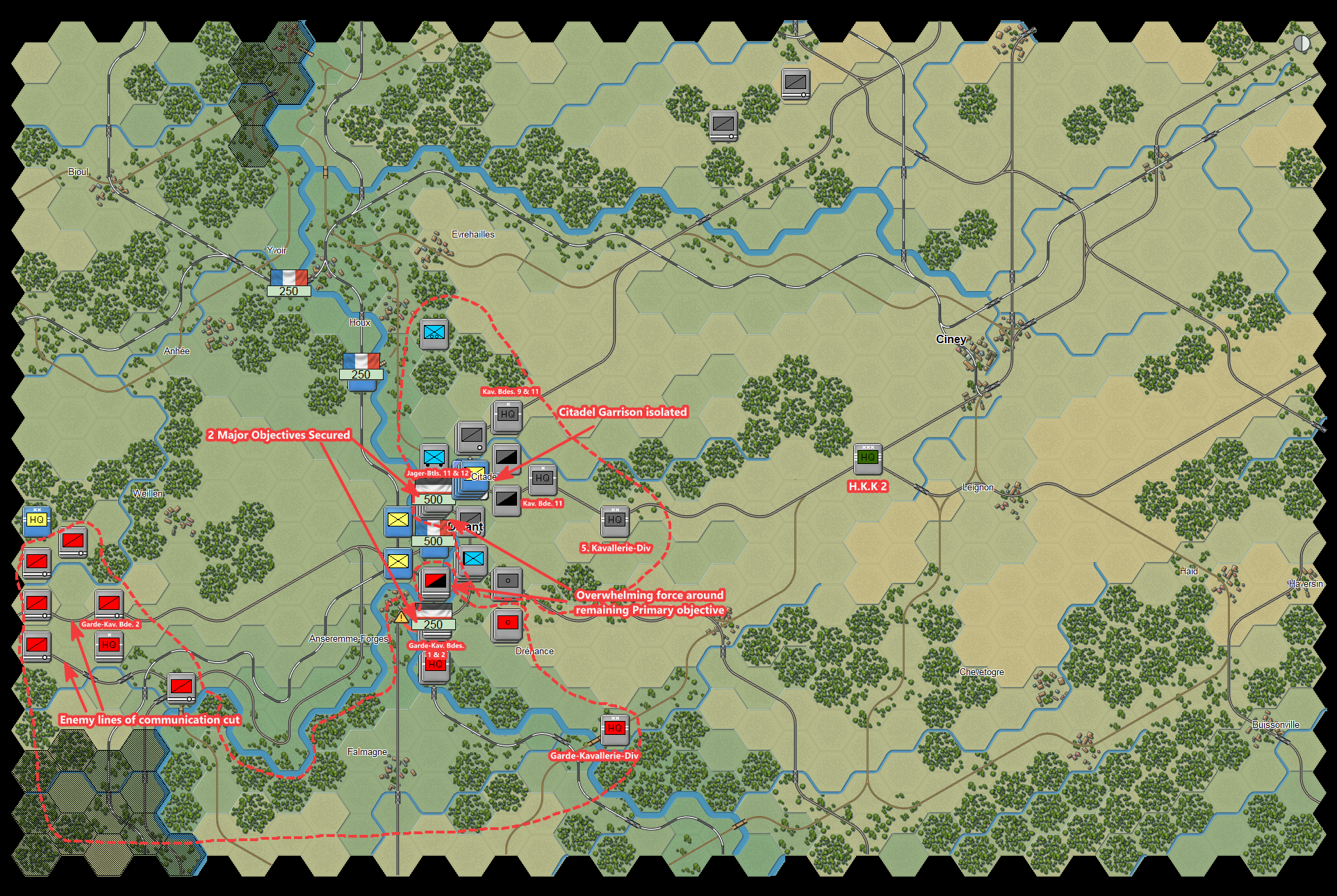
Garde-Kav. Bde. 1 pushed into southern Dinant from Anseremme-Forges around 1400, eliminated the brigade headquarters there, and secured the area. A further attempt on the citadel was repulsed with relatively light casualties on both sides. Large numbers of infantry and guns were now visible marching on Dinant from the hills to the west.
Further assaults on the citadel failed around 1600. Some support weapons were repositioned to the western side of the river to conduct defense fire against the oncoming French infantry. The cyclist company from Jäger-Btl. 11 attempted a crossing at Houx and but was turned back with light losses.
Heading into the early evening of 15 August, the same cyclist company from Jäger-Btl. 11 forced the crossing at Houx and secured this key location. German units consolidated inside Dinant and conducted defensive fire against the infantry advancing from the west. No further attacks were made on the citadel. By this stage the enemy appeared largely cut off from supply by Garde-Kav. Bde. 2's highly effective interdiction and was mostly disrupted, struggling to maintain effective command and control.
Support weapons from the Garde-Kavallerie-Division Artillerie deployed and opened fire by early morning of 16 August, inflicting severe losses on the infantry to the west. For the remainder of the morning, Germans continued to hold Dinant and the captured crossings, inflicting heavy casualties on enemy formations remaining in the open fields west of town. The Allied counter-attack was halted and no further attacks or manuevre developed.
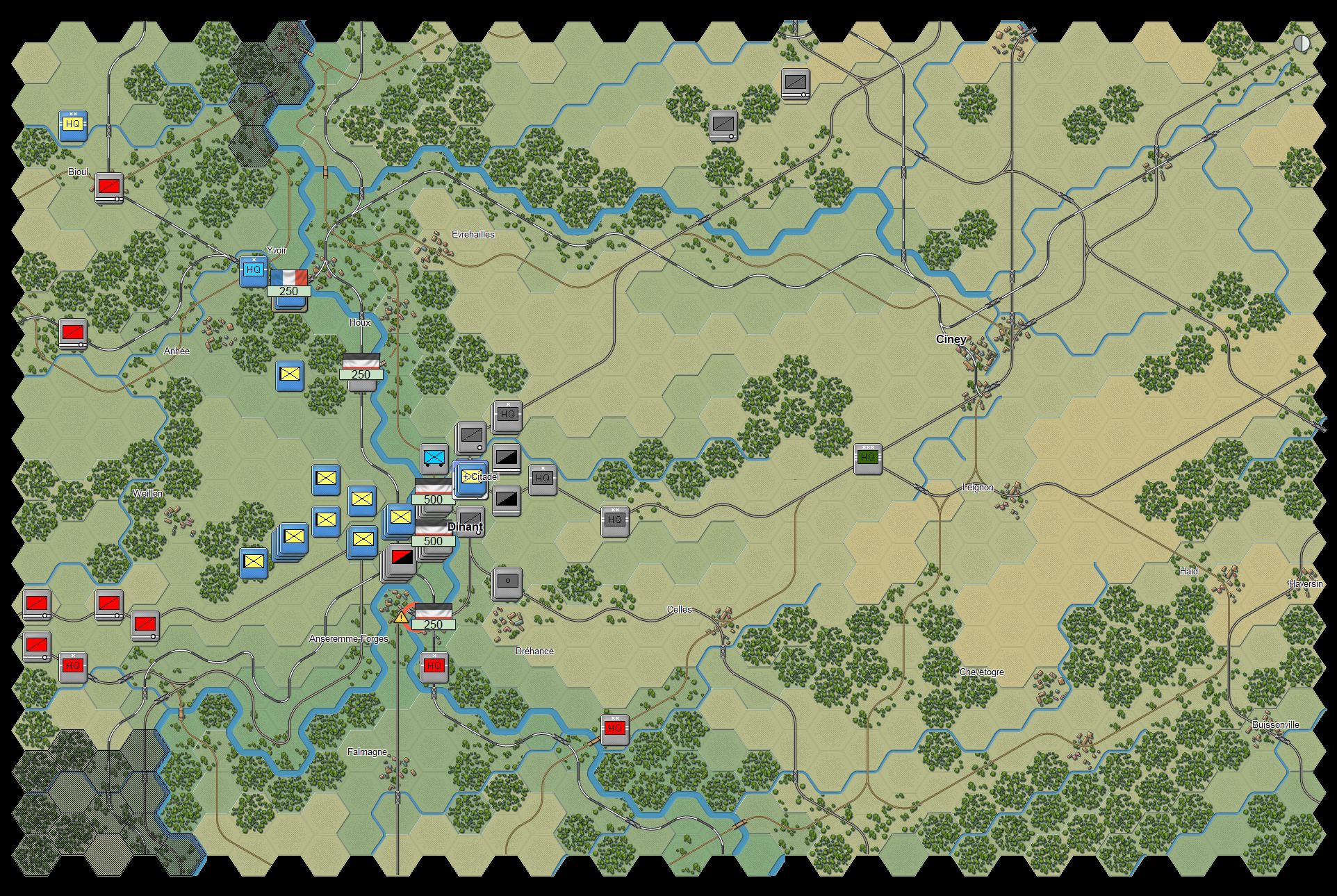
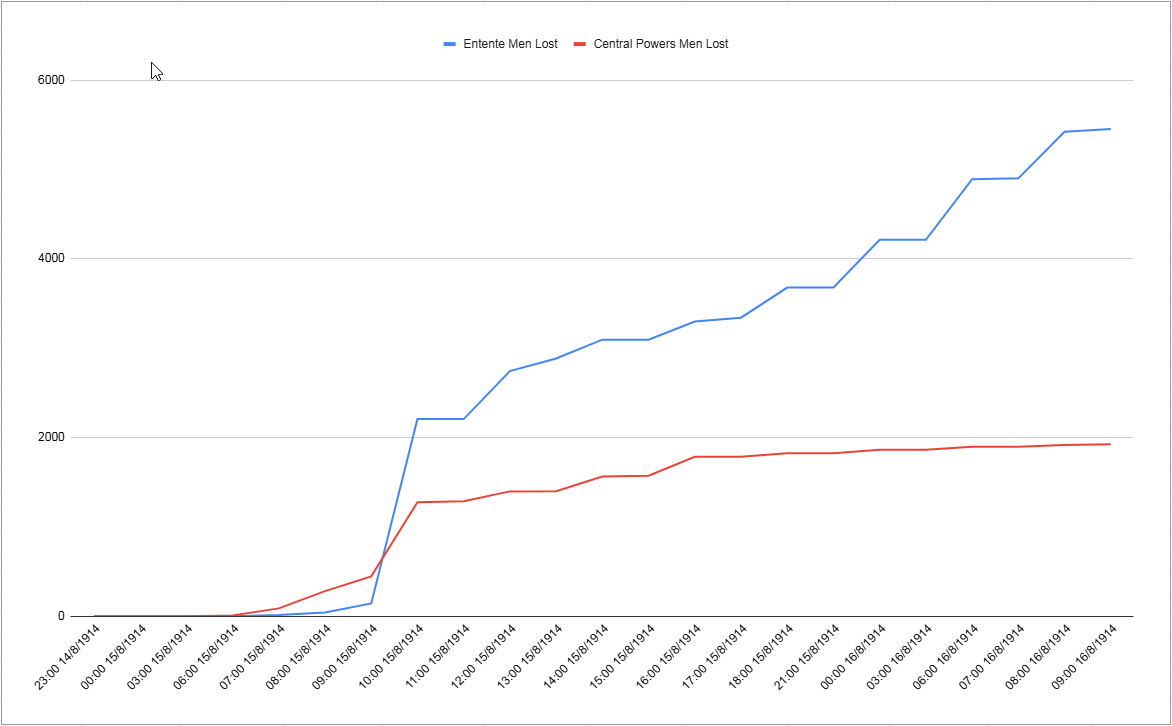
The battle ended in a Central Powers Major Victory. Both sectors of Dinant, Anseremme-Forges, and the Houx crossing were held, and Allied losses reached 5453 men against 1925 German casualties.
Context
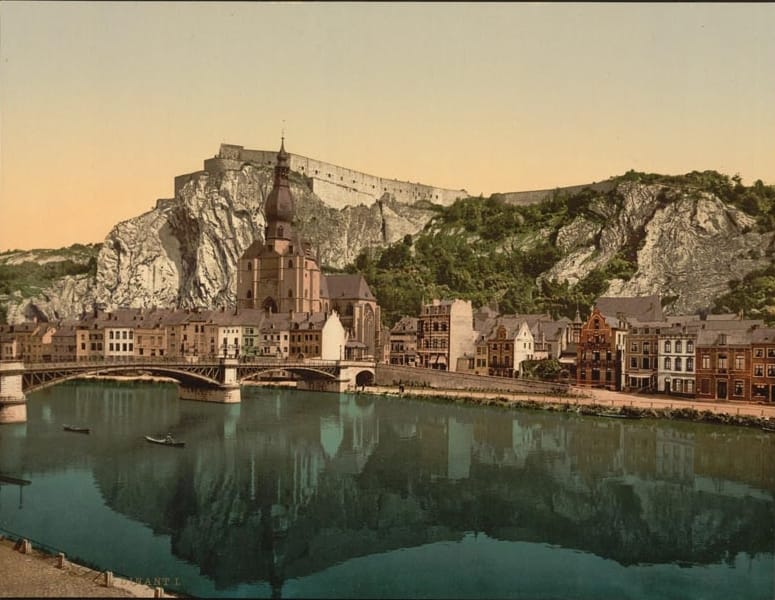
The fighting around Dinant was part of the wider Battle of Charleroi during the Battle of the Frontiers. German forces of 3. Armee (von Hausen) sought Meuse crossings. French Fifth Army troops defended the west bank and the town. Early actions included a German seizure of the citadel on 15 August, quickly reversed by a French counter-attack. Heavier fighting followed in the days after, culminating on 23 August.
The Germans ultimately secured crossings and pushed the French back, achieving a tactical and operational success that supported their broader advance. French casualties in the fighting around Dinant were roughly 1100-1200, with German losses somewhat higher at 1275 killed and around 3000 wounded (4275 total casualties). The action did not halt the German advance through the area, though it contributed to the friction and delays the Allies imposed in the opening weeks
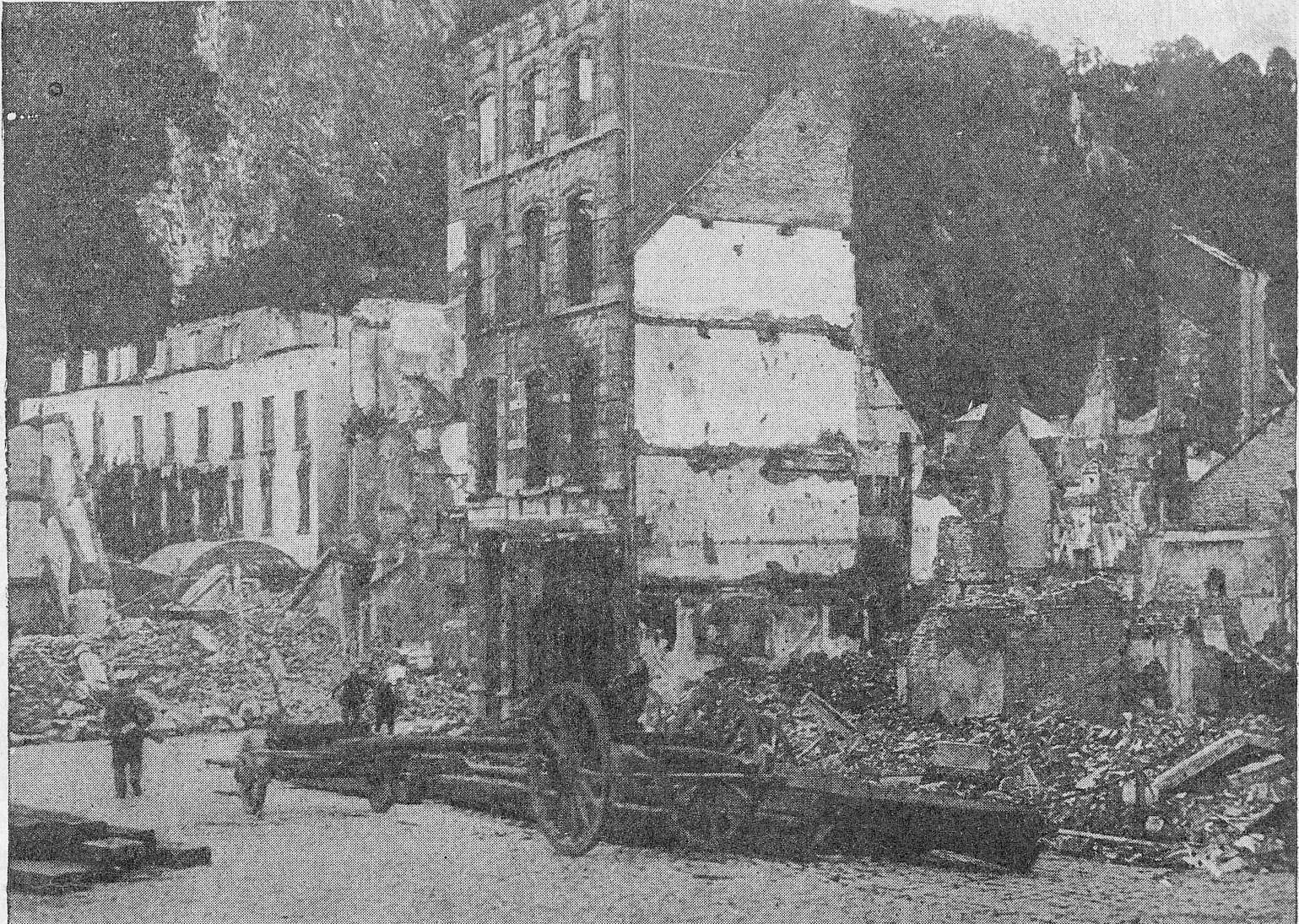
On 23 August, after further fighting and under the belief that "francs-tireurs" were active in the town and assisting in the defense, German troops carried out mass executions of unarmed Belgian civilians. Approximately 650 men, women, and children were killed in Dinant, Neffe, and nearby areas. Around 1,200 houses were burned resulting in roughly two-thirds of the town's buildings being destroyed. Public and historic buildings, including the collegiate church and town hall were wrecked. About 400 people were deported to Germany and interned until November. Killings and burning continued into 24 August. This was the largest single massacre of the "Rape of Belgium" in the opening phase of the war.
This action follows our earlier Battle of the Silver Helmets by three days. Both were early attempts by the German cavalry to open the way for the right wing. At Haelen, von der Marwitz’s H.K.K. 2 tried to seize the Gete crossings so the 1. Armee could continue its sweep through Belgium. Farther south, von Richthofen’s H.K.K. 1 was pushing for the Meuse crossings at Dinant to clear a path for 3. Armee. The two corps were operating on widely separated axes, so none of the same formations appear in both actions. Together they formed part of the broader effort to keep the right wing moving and to prevent the Belgians and French from establishing a firm line on the river barriers that lay across the German advance.
Commentary
I was pretty pleased to be able to complete this operation successfully within the timeframe given, as this is not what happened historically.
I do think a key factor in my success was the fact that we simply bypassed the citadel, sending the bulk of our forces into Dinant proper. This, of course, is only possible by also securing the crossing at Anseremme-Forges, and the south of Dinant, since without it, any troops in north Dinant would then be isolated due to enemy zones of control emitting from the citadel.
A takeaway from this though, is that once we had secondary supply established to troops inside Dinant, repeated assaults against the citadel were unnecessary since they had massively diminishing effectiveness, and since it was not an objective, we could have happily left that garrison where they were for the timeframe of this operation.
I figured that the enemy had good numbers to attempt a counter-attack, but closer inspection indicated that not only did morale collapse once they became isolated, lack of supply lines meant most of these units were low on ammo, and without lines of communication to command, were unable to recover from disruption too, which makes any assault attempts impossible.
This highlighted the value of fast-moving reconnaissance troops. It was by pure luck that we were able to isolate the only French supply source, since we don't actually have this information normally, and operating enemy forces will typically have multiple supply sources, if they're not just using the map edge.
Our estimations of enemy strengths and positions were once again fairly accurate. We will continue to use known Orders of Battle in combination with scenario briefs to paint a reasonable picture of enemy troop dispositions. It may also be worth attempting to estimate or do a best guess on enemy supply sources in order to isolate units.