The Hunters: German U-Boats at War, 1939-43 - Patrol 4 (May 1940)
1/5/1940
We left Wilhelmshaven once more bound for the British Isles. The men are acutely aware that we are going through the motions at this point, risking limb and neck only to be disappointed by faulty torpedoes. We have still heard nothing reassuring from the Torpedo Directorate that this patrol will be any different.
The two transit legs and the first operational sector passed without contact. For once we were almost glad of the empty sea.
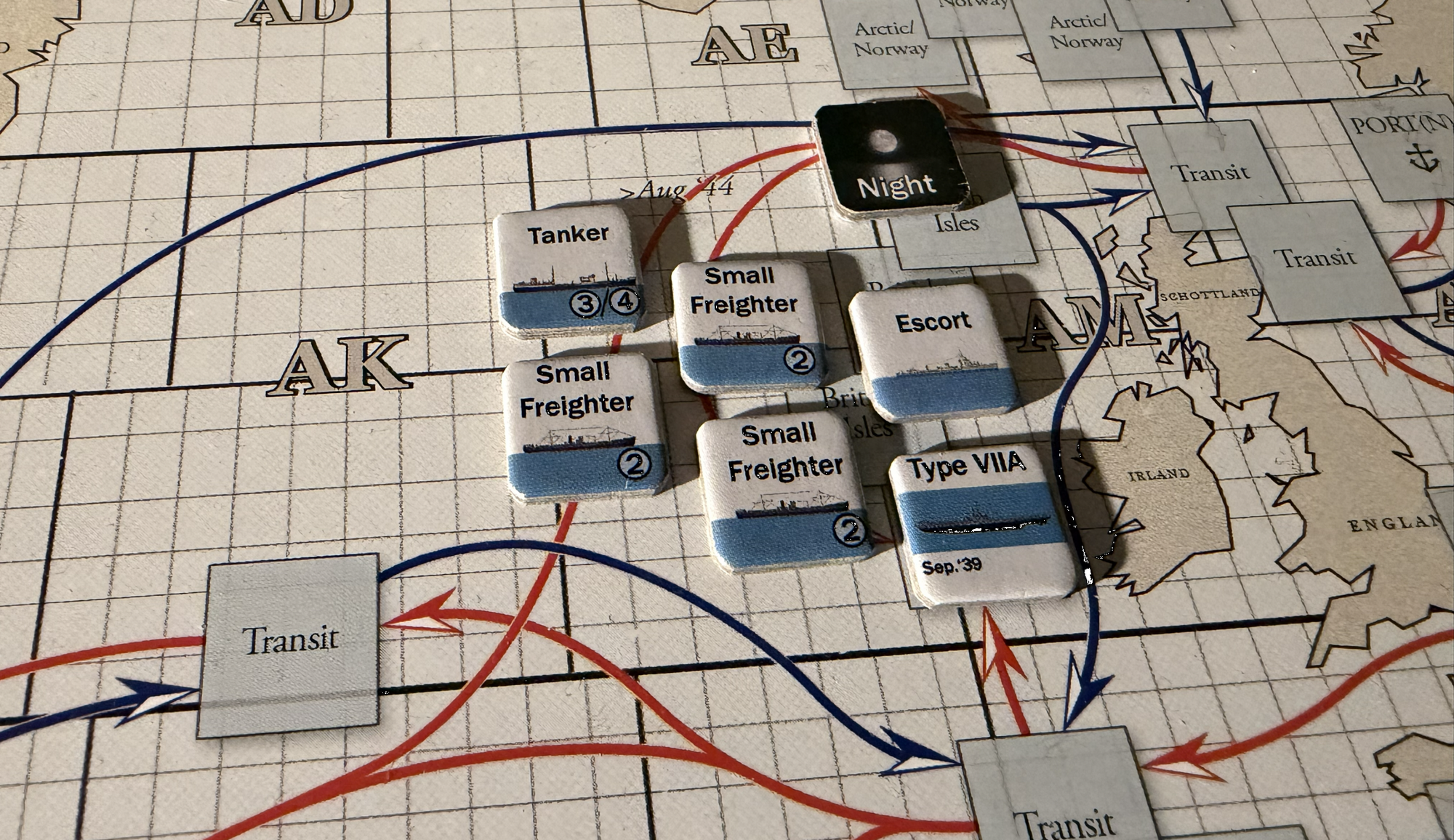
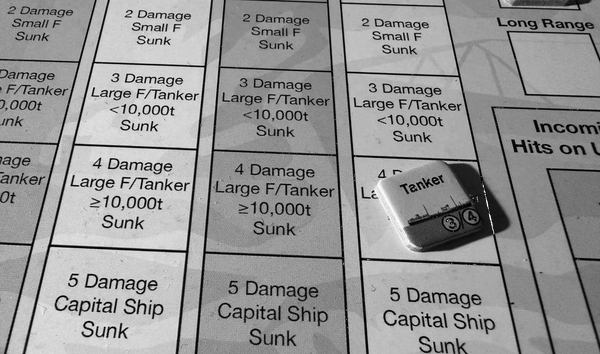
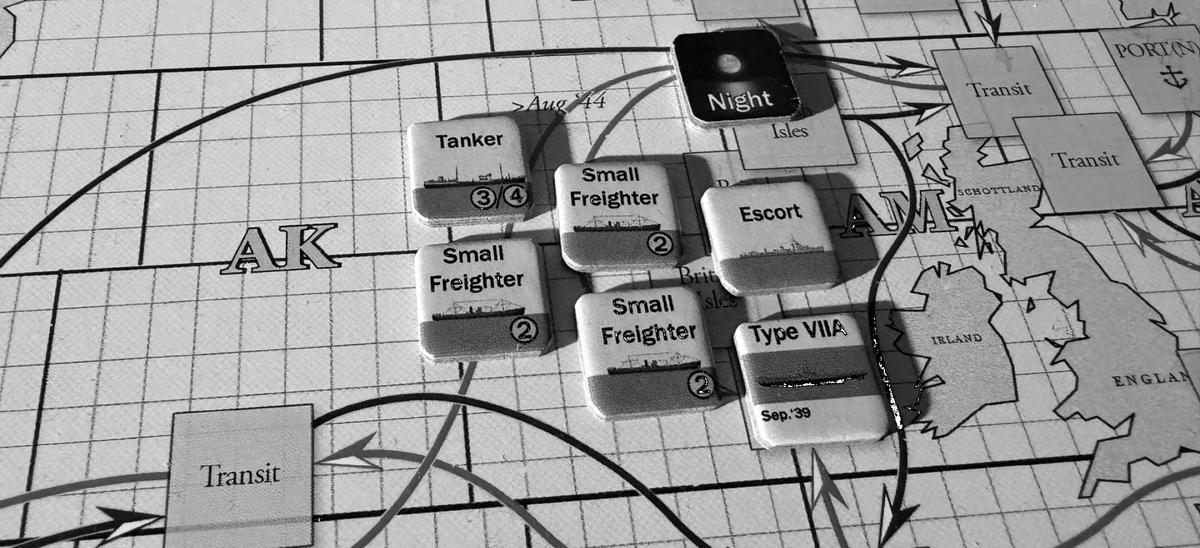
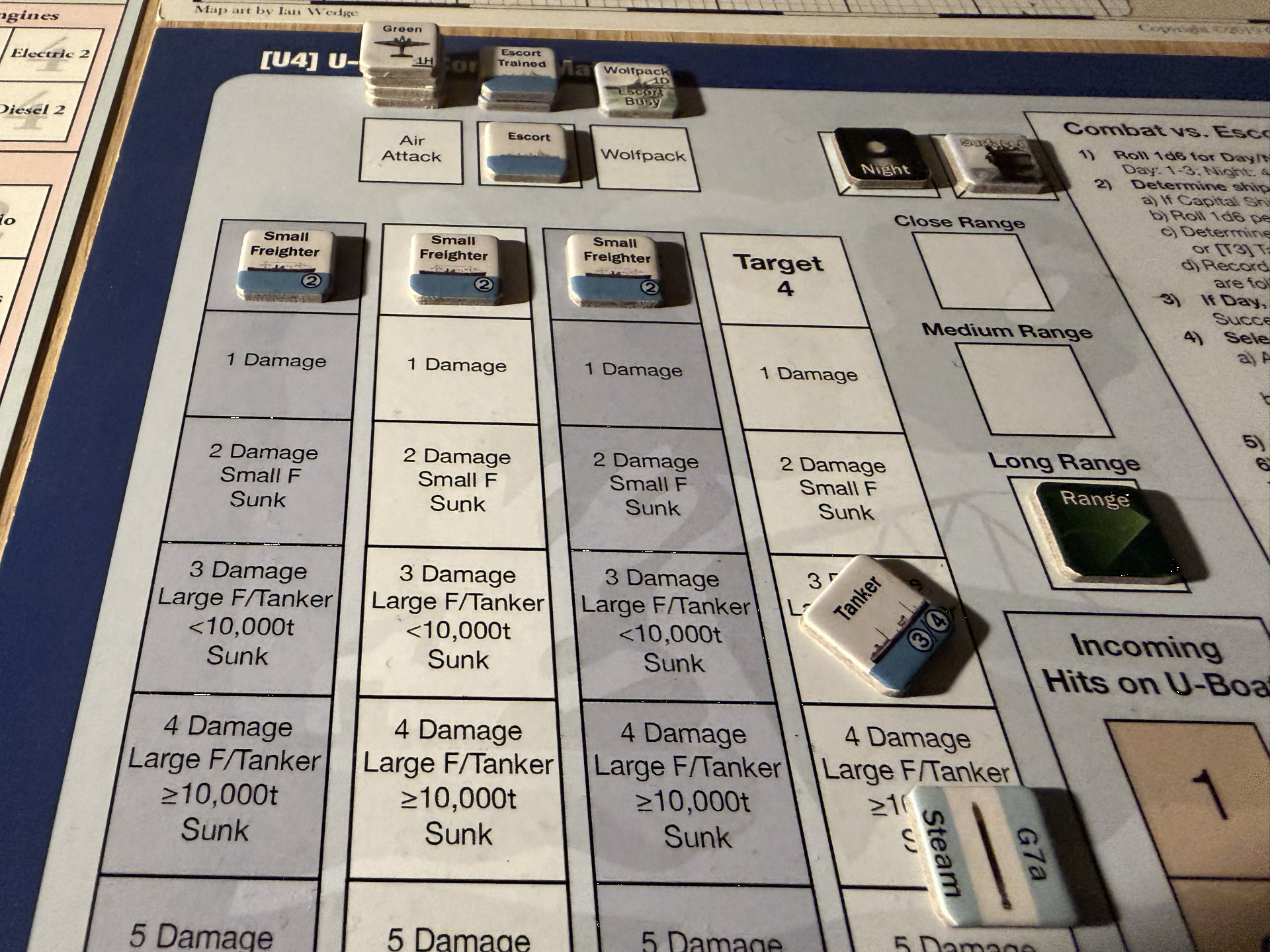
On the night of the 12th we found a convoy in the second sector, small freighters Bancrest (4,400 tons), Confield (5,000 tons) and City of Oxford (2,600 tons), together with the tanker Yarraville (8,600 tons). The tanker was clearly the most valuable target. Not wanting to take unnecessary risks, I ordered all four forward tubes fired at her from long range. Accuracy has not been our failing, and the greater distance would give us more time to get under if the escorts reacted quickly. It was somewhat overkill, but after the frustrations of previous patrols we had no appetite for re-engagements due to duds.
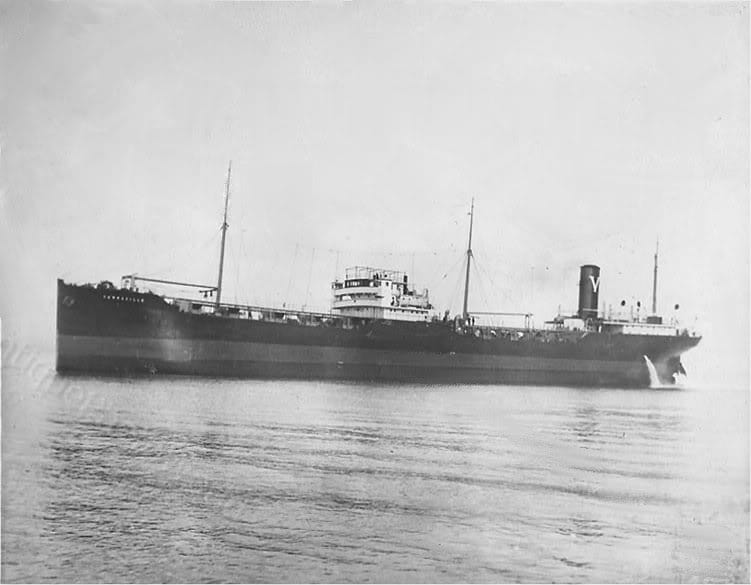
One hit, three misses. The single torpedo that found its mark detonated with a spectacular explosion. The Yarraville split in half and went under almost at once.
The escort was clearly line-quality, yet the extra range gave us just enough time to dive before they could close. We slipped away cleanly. We tried to shadow the convoy while the tubes were reloaded, but they gave us the slip in the darkness.
The remaining two sectors were empty. With the boat still in good condition and a reasonable number of torpedoes left, I decided to attempt a replenishment at sea. Unfortunately we were unable to secure a timely rendezvous with the supply ship. There was nothing for it but to make for home.
Both transit legs passed quietly. We entered Wilhelmshaven safe and sound. This one can be chalked up as a success. We had a measure of luck in mitigating the enemy’s skill at detection, and for once, we suffered no duds at all. Torpedo accuracy was poor (only 25%), but our evasions were on point. The cleanness of the patrol means we will be ready for sea again in July. With his second patrol under his belt, LtzS Leonard Fischer receives his Uboat Badge.
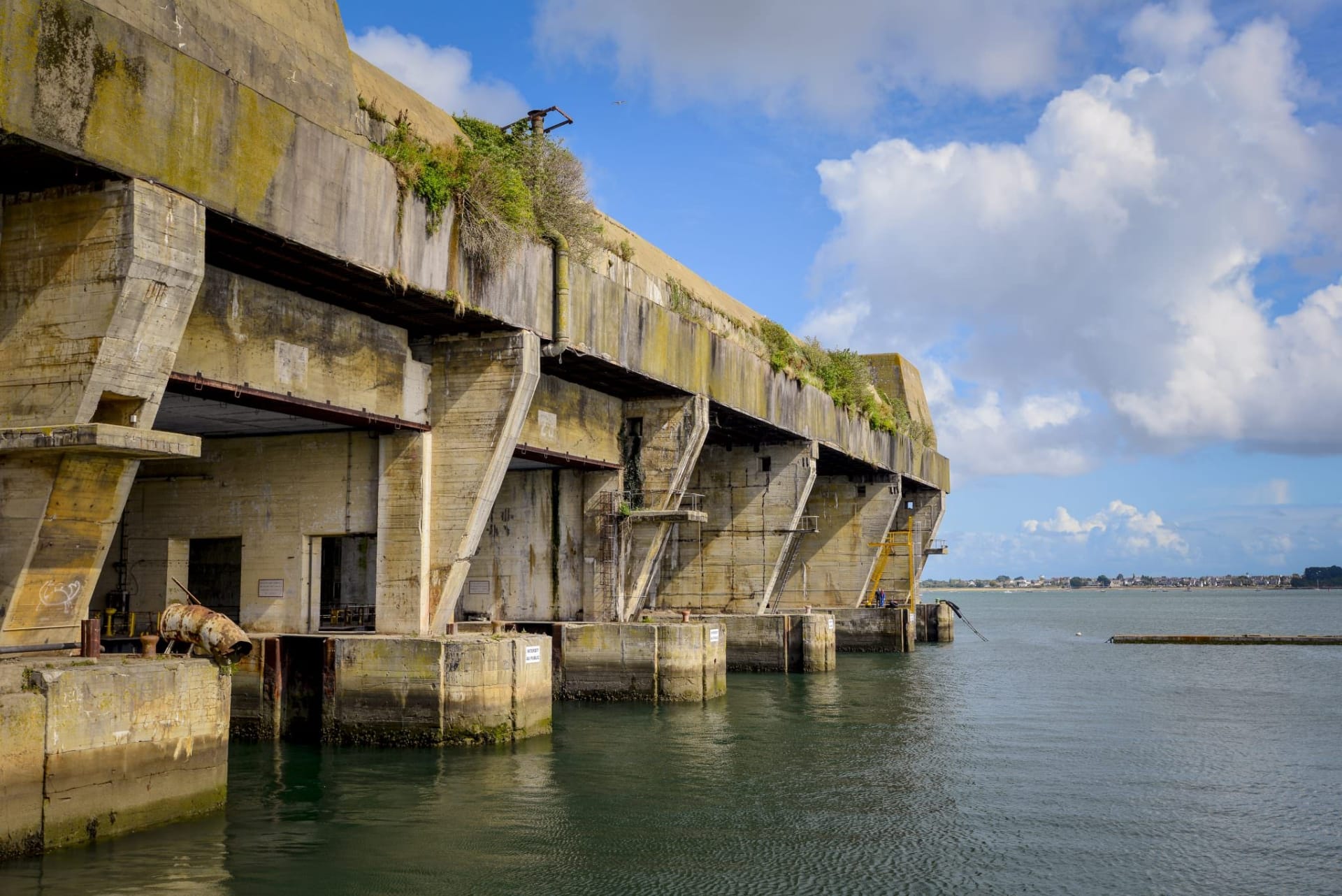
More significant news awaited us on return. Following the swift conquest of France and the establishment of U-boat bases on the French Atlantic coast in the Bay of Biscay, Flotilla Salzwedel is to relocate to Lorient. This will allow the U-Bootwaffe to shift operations deeper into the Atlantic proper, with a secondary focus on the Spanish and West African coasts. The next patrol will be our last excursion from Wilhelmshaven for the foreseeable future.
Further good news: the Torpedo Directorate has at last informed us of a technical solution for the G7E that should improve its reliability somewhat. In addition, the capture of a British submarine has allowed a reverse-engineering effort on its torpedoes, which may help mitigate some of the persistent problems with the G7A. It is about time they took the matter seriously.
Context: The German offensive in the West began on 10 May, and in six weeks France had signed an armistice. The quick collapse gave the Kriegsmarine the French Atlantic ports (Brest, Lorient, St. Nazaire, La Pallice and Bordeaux). These bases lay hundreds of miles closer to the main Allied convoy routes than Wilhelmshaven.
The first U-boat to use a French base was U-30, which entered Lorient on 7 July. Dönitz immediately began shifting the centre of gravity of the U-boat arm westward. Flotillas would soon relocate, and the true Atlantic campaign, later remembered as the first "Happy Time", was about to begin.
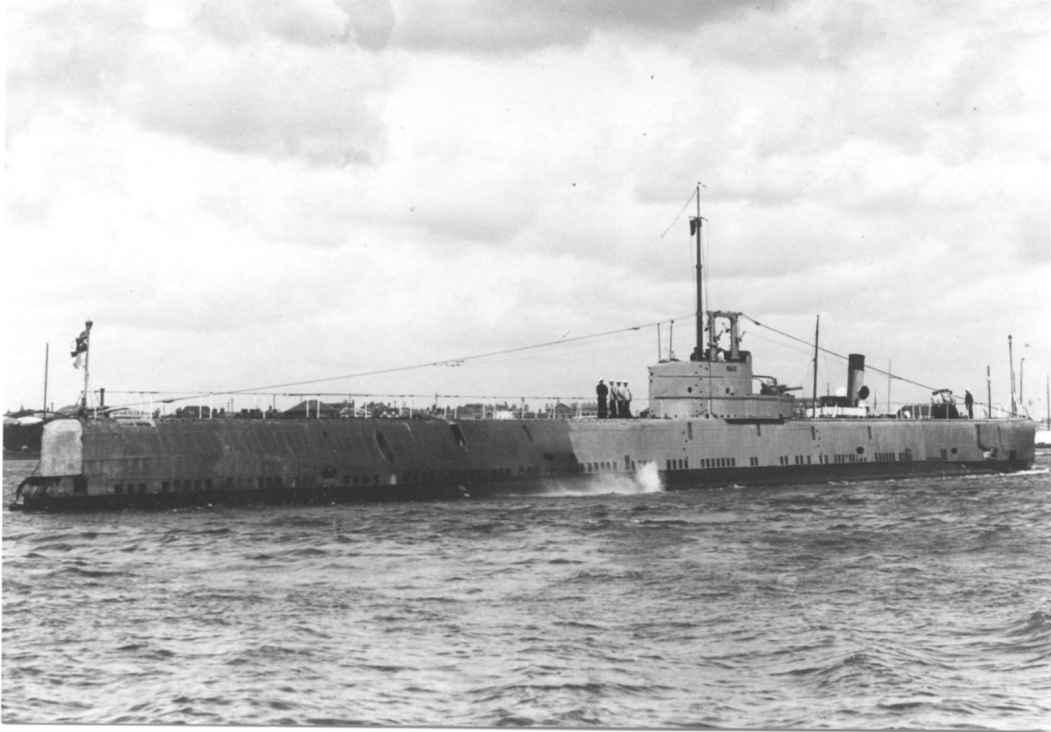
On 5 May 1940 the British minelaying submarine HMS Seal was captured largely intact in the Kattegat after striking a mine and being forced to the surface. She was towed first to Frederikshavn and then to Kiel.
German technicians examined her equipment in detail. Of great interest were the British Mark VIII torpedoes and their Type 3 contact pistols, which proved more reliable than the German designs then in service. Insights gained from this examination fed into the ongoing work of the Torpedo Directorate. Combined with other technical investigations, the captured British pistols contributed to improvements in German contact detonators, one of the steps toward mitigating the worst of the torpedo crisis that had plagued the U-boat arm since the start of the campaign.
May-June 1940 marked the end of the first, constrained phase of the U-boat war and the beginning of a far more dangerous period for Allied shipping.
Commentary: For this patrol I made a conscious decision to play it careful until we can get to a point where we start fielding more reliable torpedoes, but also with the Type VIIA submarines being decommissioned from front-line duty and replaced by Type VIICs in December 1940, the whole exercise is pointless if we perish in combat before then. Once we do get to that stage, we should have a good bit of hunting until the Allied ASW efforts eventually catch up.
As such, we focused our efforts on single targets in the case of convoy attacks, and did so at long range. In the case of Yarraville though, we were quite lucky not to get any dud hits, only misses. Just as well we engaged at long range too, because I made the evasion roll on that detection sequence by a single point. Any closer and we would have been dodging depth charges again.
Given the outcome of this patrol in relation to the two prior to it, I'm inclined to stick to this plan until circumstances become more favourable for us.