The Hunters: German U-Boats at War, 1939-43 - Patrol 2 (November 1939)
1/11/1939
We left Wilhelmshaven at the beginning of November, once more bound for the British Isles. The first two transit sectors passed without incident.
On the night of the 9th, in the first operational sector, we found a small freighter under escort, the Lapland, only 1,300 tons. I ordered a medium-range surface approach to make use of the optics. It felt wasteful to spend three torpedoes on so small a target, but a quick success would be welcome. One hit, two misses. No duds this time, yet the single explosion caused only minor damage. She stayed afloat. I cursed the decision almost immediately.
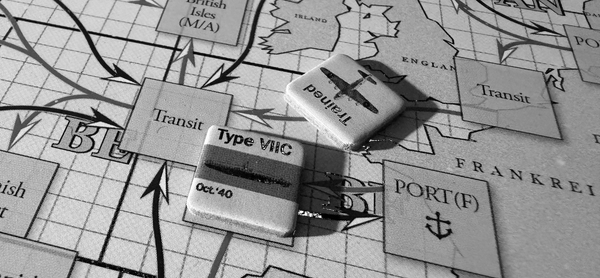
The escort was trained and gained a fix on us. We turned hard to port while the escort held its course; the last-minute change took some of the sting out of the depth charges. With their fix established I took the boat deep, beyond test depth. She held. The extra depth, and perhaps a thermal layer, finally shook them off. We broke contact to reload. If we were going to finish this miserable little freighter I wanted to do it with the electric torpedoes and keep the remaining G7As for something worth the expenditure.
When we regained contact the escort was nowhere in sight. Still hunting our old track, perhaps. We surfaced at close range and put the deck gun on her. One hit, one miss. It was enough. The Lapland went down.
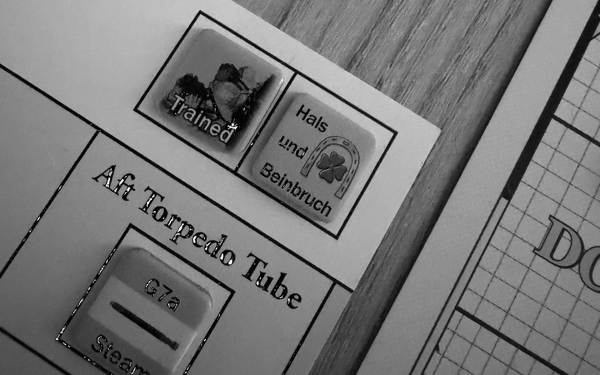
In the second sector that same night we found another small freighter, the Stancliffe of 4,500 tons. More worthwhile than the last. I closed to short range for the gun. One hit, one miss-only minor damage. Rather than let her slip away I fired a single forward G7E. It ran wide before it even had the chance to fail as a dud. The aft G7A followed, struck cleanly, and detonated, putting her below.
The third sector was empty.
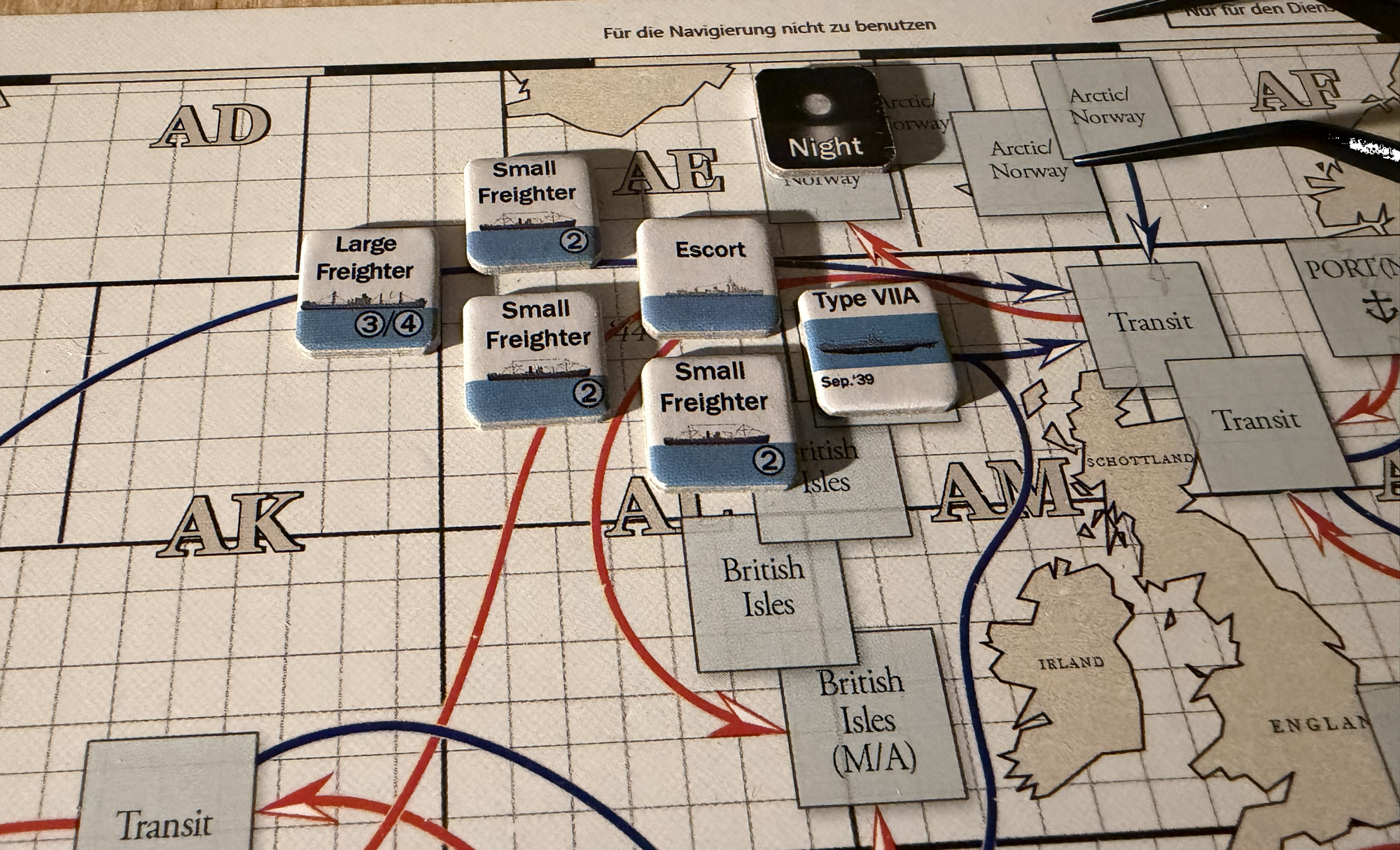
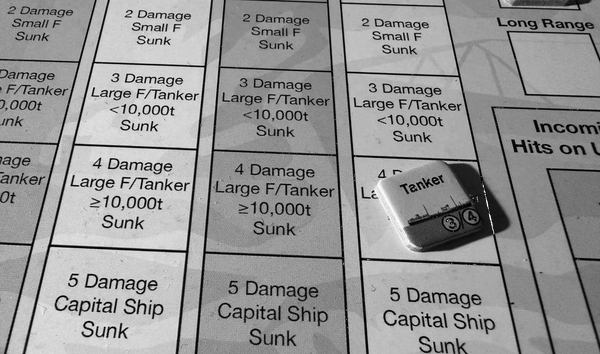
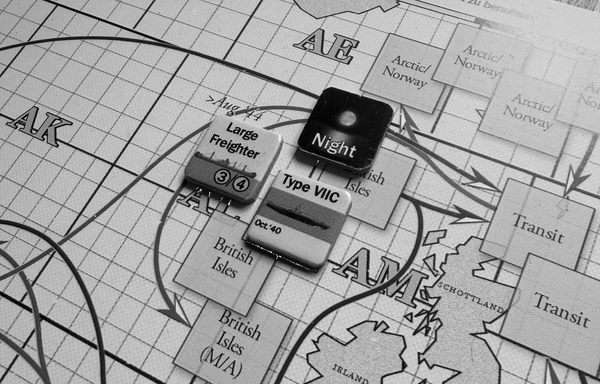
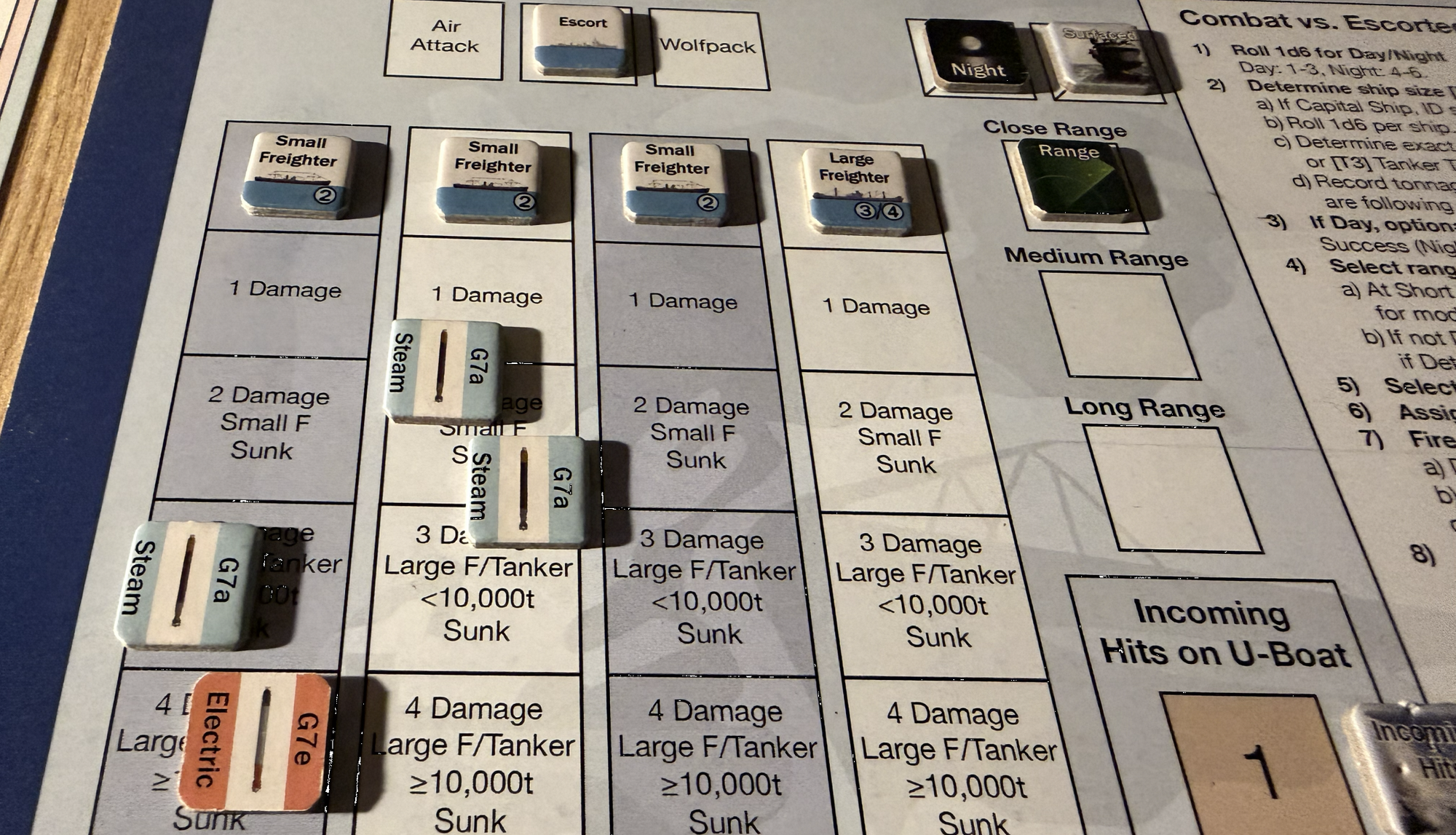
On the night of the 15th we located a convoy: the small freighters Inverness (4,900 tons), Traveller (4,000 tons) and Ruperra (4,500 tons), together with the large freighter Empire Wildebeeste (5,600 tons). I decided on a close-range surface attack, using the darkness to keep our silhouette small. Inverness and Ruperra made better targets for us, apparently easier to sink than the larger ship. We fired two G7As at Inverness and one G7A plus the remaining G7E at Ruperra.
Both torpedoes against Inverness hit, only to bounce of the hull.
Against Ruperra the G7A struck and exploded, causing only light damage. The electric went completely wide.
The escort was trained and had us almost immediately. We veered hard to port. The escort held straight, which helped a little, but two charges still detonated close by causing the hull to buckle. Our 2WO, LtzS Emil Fleck, took a severe head wound. With the boat already hurt I had no choice but to take her deeper and hope. She held, even in her damaged state. The pings slowly faded. We had lost them. U-34 is a tough girl after all.
All that effort for nothing but light damage to one small freighter. We broke off, reloaded what we could, and continued to shadow the convoy for a time, but the escorts kept the formation tight around the damaged ship. Given the state of the boat and our remaining ordnance, a second attack would have been foolish. I ordered us home and hoped the return passage would be quiet.
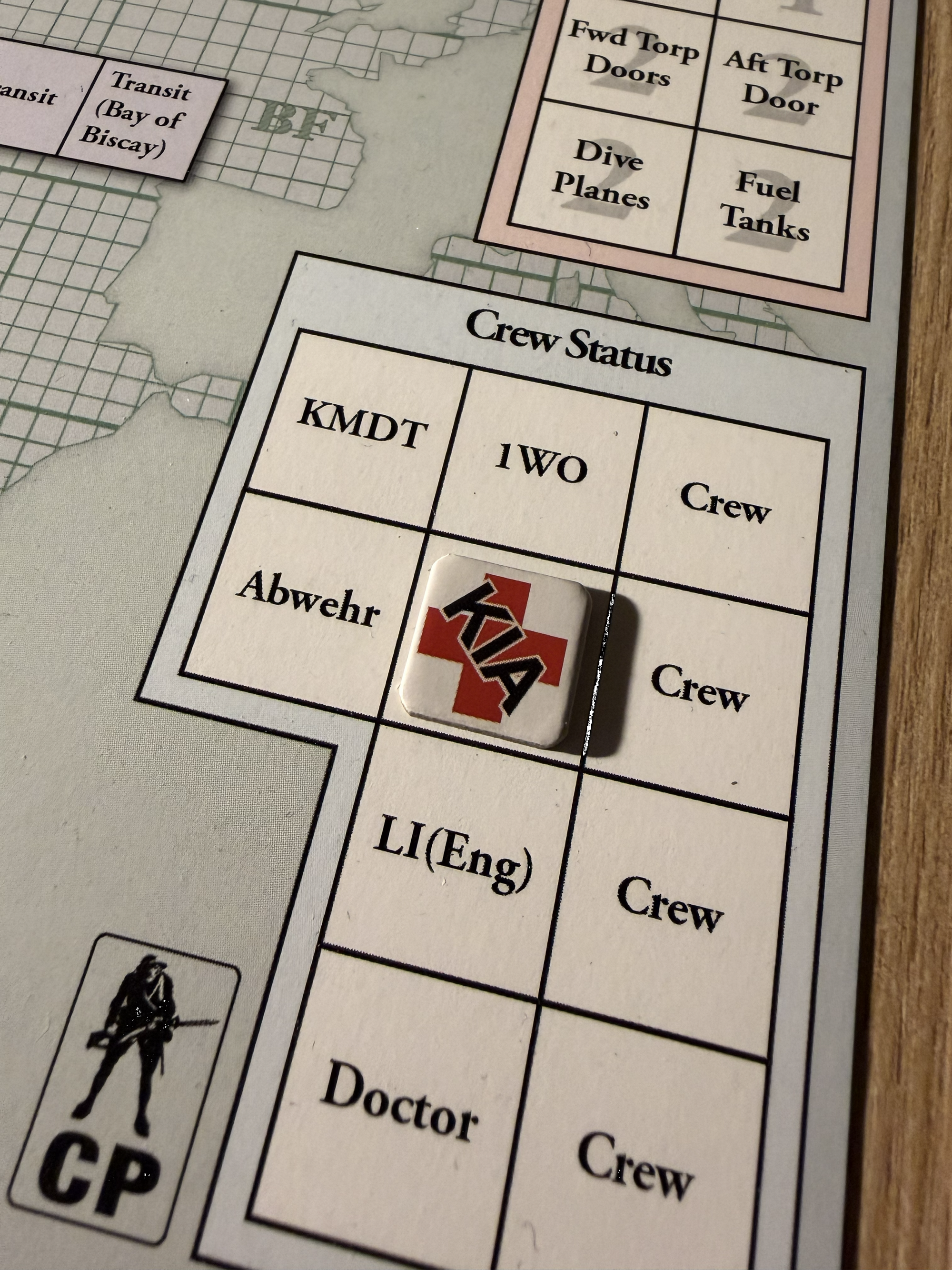
Both transit legs were empty. On the way back Emil Fleck finally succumbed to his wounds. A heavy silence settled over the boat.
This u-boat war was feast and famine in the worst sense. We took the fight to the enemy, but it did not go our way. Evasion procedures showed clear weaknesses. The enemy fixed us twice and made us pay. Accuracy was down (gunnery at 50%, torpedoes little better at 55.6%), and a 40% dud rate only compounded the frustration. Perhaps we had grown over-confident after a stellar first patrol. War has a way of humbling you. The shipyard will need an extra month to beat the hull panels back into shape. Fortunately it means our crews should get a bit of time for shore leave, perhaps to visit home. We'll need the additional time to bury Emil and find a replacement 2WO.
The repair period will see us through to February 1940. BdU have acknowledged widespread construction issues on our torpedoes and Dönitz has personally made it his mission to resolve this, lest the Ubootwaffe lose their fighting spirit. For now our focus will continue to be the harrassment of merchant shipping on the Western Approaches, but everyone knows a land war with France is just around the corner which will mean a change in our operational environment and priorities.
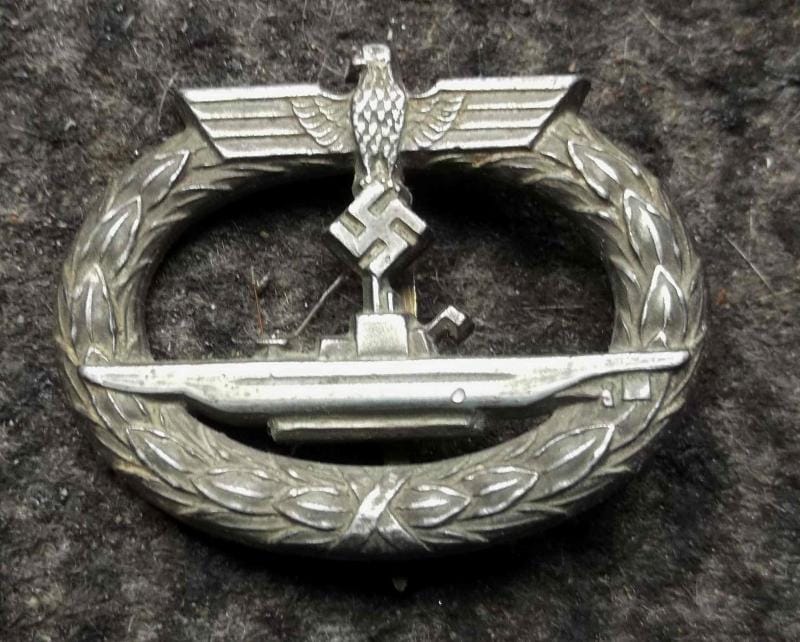
The completion of this patrol sees all crew members awarded with the U-Boot-Kriegsabzeichen
Context: By November 1939 the intial surge of u-boat activity had settled into a more constrained and frustrating phase. The Kriegsmarine still only possed a small number of ocean-going boats, with only a handful on station at any given time. The numbers were far below what Karl Dönitz believed was necessary for decisive tonnage war.
Actual tonnage of sinkings remained significant for the number of boats deployed, but was nowhere near the scale required to threaten Britain's survival. At this stage most of the successes still came against independent-sailing ships, but convoy attacks were becoming more common.
Torpedo reliability issues reached a peak. Magnetic pistols failed or detonated prematurely and depth keeping errors were widespread. Dud rates between 25% and 40% were regularly reported. In December 1939, the head of the Torpedo Directorate was replaced, but a real solution still lay months away, and testing would be hampered by the harsh Baltic winter of 1939-40.
Furthermore, storms in the North Atlantic and the Western Approaches were brutal. Boats were often forced to submerge or reduce speed, which limited search time and attack opportunities. With hardly any boats on station, even short periods of bad weather meant large gaps in coverage.
The convoy system was now well established and growing more effective. Escort numbers and experience increased, but air cover was still limited. Actual ASW techniques were still imperfect, but the combination of convoys and the fact that escort duty was being taken seriously made attacks more difficult and dangerous.
From the German perspective, it was still a period of grinding attrition rather than a decisive success. Boats continued scoring and there were plenty of individual commanders that enjoyed plenty of success.
The bottom line is that the war was very much as it was before, the u-boats remained a big threat in theory, but insufficient numbers and equipment defects prevented them from actualising this. The decisive phase was still to come.
Commentary: I felt immediately negative about this patrol when we encountered the Lapland, I seriously considered even abandoning pursuit, not wanting to spend torpedoes and potentially weather a depth charge attack for 1300t. I think as the war progresses, this is definitely something I would consider even more strongly. The war is far from over and I don't need to put us in risk for marginal numbers.
As for my attack on the convoy, having reviewed the situation I still stand by my decision to spread the torpedoes across two of the small freighters in the way that I did. If you look at it from tonnage per hit perspective, these two targets make the most sense, and spending three torpedoes on either one of them would be overkill, but I acknowledge that our expected damage per torpedo is still technically less than one, once you factor in the probability of duds, meaning there was always a real chance I would walk away from that encounter without a single sinking.
I'm still a little unclear on when the best time is to exceed test depth on evasions. It is very tempting to continue diving once the enemy has a fix on you, but the incremental compromising of the hull makes this quite risky the more you do it